
Is VCE Literature Just the 'Harder' English?

As you come up out of your pre-VCE studies, you might have been offered or encouraged to take the option of doing VCE Literature. Some schools will have you do Literature instead of English others will encourage or mandate that you do both.
But what even is VCE Literature, and is it really just the “harder” English? How do you know if you’ll do well in Literature, or if you’ll bomb the subject and be left with a dud?
The answer is not simply that Literature is harder. It asks for a different way of reading, thinking and writing, and for some students, that can make it feel easier. Here at LVCET, we have guided over 2000 students distributed between both subjects over years, so we know a thing or two about this. Read on for the signs that VCE Literature might actually suit you better.
Sign 1: You’d rather read more, and more widely
The biggest structural difference between VCE English and Literature is what the exam asks of you. In English, you sit three tasks, and only one of them — the text response — is based on a set text. The other two, Crafting Texts and Argument Analysis, train quite different skillsets: they ask you to play with language creatively or analyse it persuasively, rather than respond directly to an existing canonical work.
In Literature, as the name implies, every task is built on an existing piece of literature. The study design stipulates five texts across the year, though in practice — with four SACs — most students end up doing four properly. Many of those texts will also be different forms from one another. It’s relatively rare to study poetry as an English text and very common to study a film; in Literature, almost every student works through poetry at some point, and the only films you’ll analyse are adaptations of your set texts. Over a single year, Literature students often find themselves moving through novels, plays, poems, short story collections, essays and memoirs.
If the idea of that range excites rather than exhausts you, that’s your first sign.
A quick fit check:
Sign 2: Close analysis comes naturally to you
The central skill in Literature is close analysis. Almost every piece of assessment involves taking a small excerpt from the text and reading it closely. We like to think of this as the inverse of English. In English, you study the themes and ideas, then use quotes to evidence your discussion of them. In Literature, you’re often handed an unseen passage and expected to work outward from the authorial choices, literary devices and techniques to build your thematic discussion. In fact, most Literature assessments don’t even use “topic sentences” as you’ve come to know them in English — the topic is the passage.
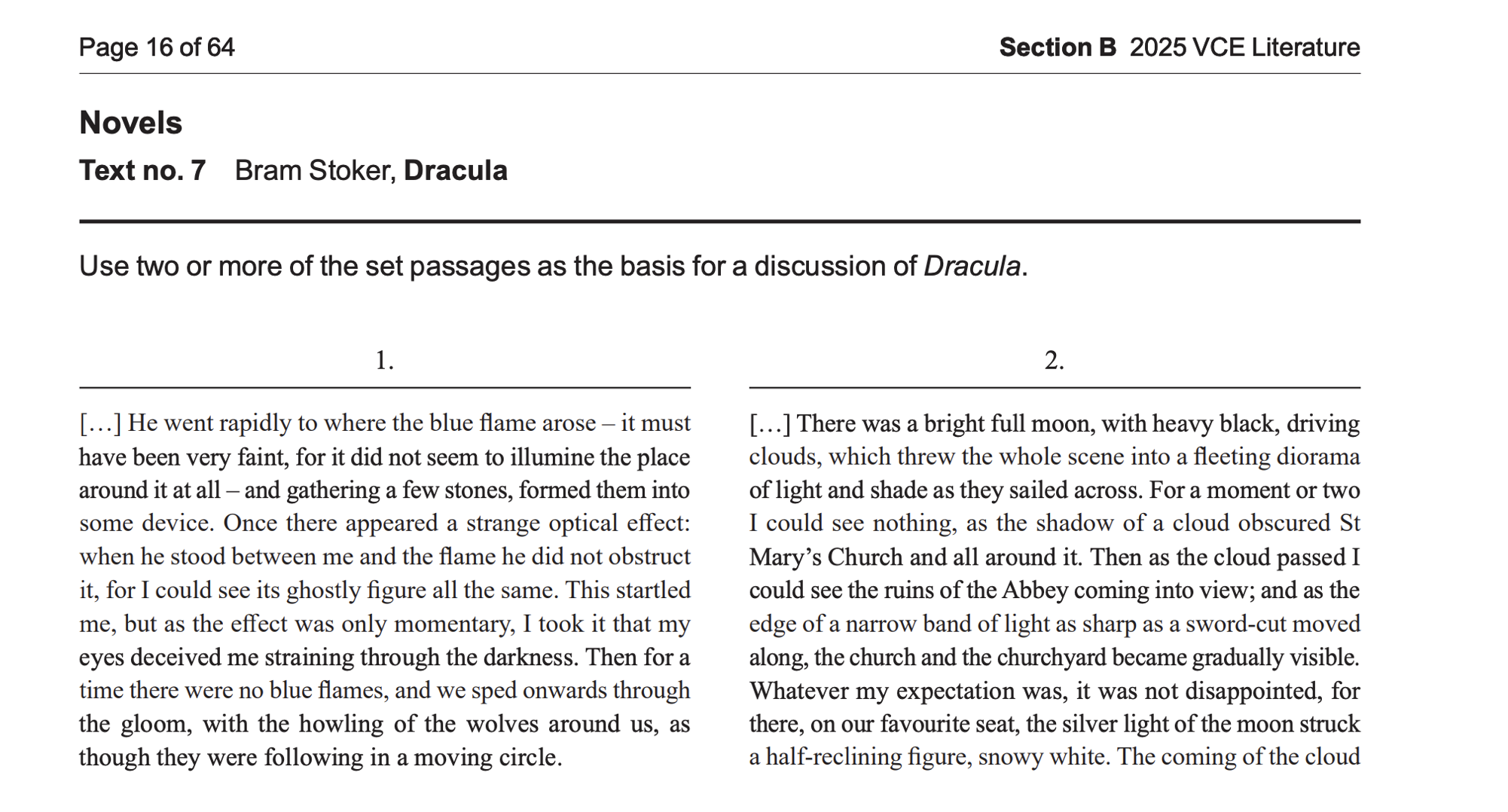
Literature lets you look closely at the sentences, the words — sometimes even a single syllable or letter — and ask how meaning is made. English, by contrast, tends to be the more holistic task.
A quick fit check:
Sign 3: Advanced academic material interests you
In English, the context surrounding a text matters, but you’re not expected to go far beyond what’s immediately relevant to your discussion. Literature pushes further. You’re rewarded for engaging with a range of interpretations and critical perspectives, and the strongest students often read academic criticism and weave it into their own reading of a text. If the idea of digging into scholarly essays about a novel sounds interesting rather than intimidating, that’s a strong signal.
A quick fit check:
Sign 4: English is already one of your strengths
Finally, Literature may feel easier because it suits you — without necessarily being easier to score highly in. As a rule, students who take Literature are high-achieving English students. They often go on to English, Arts or Humanities-based courses at university: English Literature, Law, Anthropology, Journalism, Creative Writing, and the like. That’s not always the case, and there’s a genuinely broad spectrum of students in every subject, but the Literature cohort tends to be a more competitive one than the English cohort, which comprises the vast majority of students regardless of interest or ability.
This is also why teachers usually encourage Literature students to sit English as well. It’s generally true that Literature students perform better in English than in Literature. There are exceptions — I’m one myself, having scored two points higher in Literature than English — but if you’re a high-scoring English student, doing both Englishes gives you some insurance if one result comes in low (you need at least one English in your top four), and it makes for a thoroughly enjoyable year if you’re a literary nerd at heart.
A quick fit check:
So, which subject is right for you?
Is VCE Literature really just the “harder” English? Not necessarily. Literature asks you to read more, and more widely, to conduct close analysis, and to engage with more advanced academic material. For students who enjoy those things — particularly those who already treat English as a strength — Literature can feel more natural, and therefore easier, than VCE English. That doesn’t make it an easy subject: the cohort is competitive, and many Literature students still score better in English.
So the better question isn’t “Which subject is harder?” It’s “Which subject better rewards the way I already like to read and think?”
Here at Lindsey’s, we love Literature, and we’d love to help you on your journey through it — or through VCE English, if that’s the better fit. Click below for a free consultation, and let’s make your English journey a stellar one.
Related posts

The VCE English Exam Guide: Structure, Style and Advice for Every Section
A section-by-section guide to the VCE English exam: how to structure Section A, B and C, how to divide your three hours, and what separates top-band responses from the rest.

Persuasive Techniques for VCE English
A big-picture-to-small-picture guide to VCE Argument Analysis techniques — appeals, comparisons, modality, humour, connotation, syntax and phonetics — with sample analyses, past-VCAA examples and an interactive techniques quiz.
What the Science Actually Says about AI (and What I Tell My VCE English Students)
As a Literature purist, I am fiercely protective of my students’ creativity and thought process. But as the mentor and tutor to so many ambitious Year 12s, I also understand the pressures you’re under: the need to see effort translate into results, the brutally limited time you have to secure entry into your dream courses, and the temptation to reach for whatever tool gets the job done.