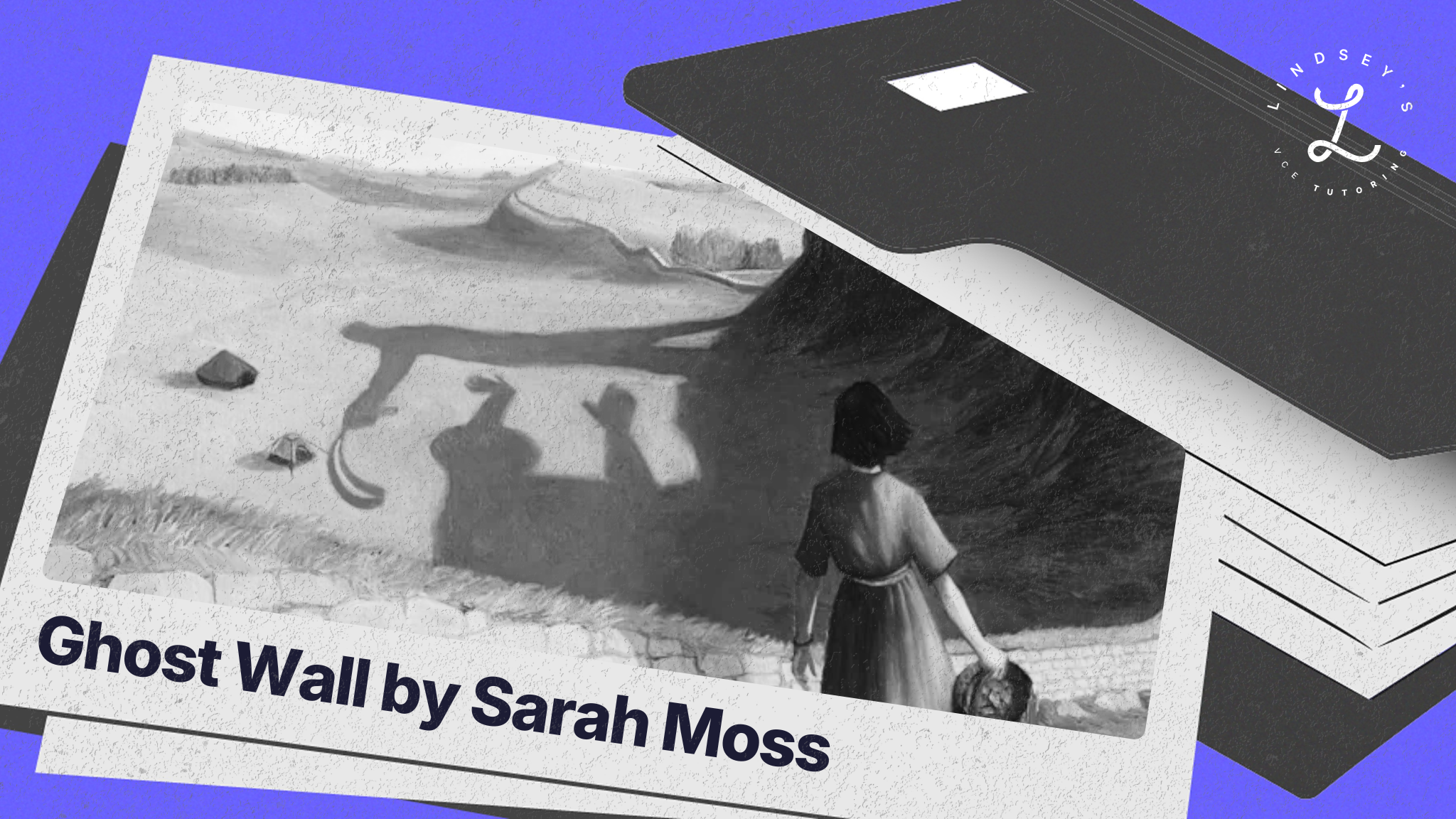
An Ultimate Guide to Ghost Wall

Sarah Moss is a contemporary British novelist, born in 1975 in Glasgow, Scotland. She is known for her literary fiction, including her novels and novellas, and typically explores themes surrounding history, loneliness, family tensions, personal relationships, patriarchy, and women's roles in society. Her writing is precise and succinct, and she is recognised for her ability to investigate and dissect the human psyche through the exploration of her characters' inner worlds. Before becoming a full-time writer, she studied at Oxford University and has an academic background in literature. She has also worked as a professor teaching creative writing and literature at various universities.
Moss' work typically deals with contemporary issues, but she is also deeply interested in how history has impacted and continues to intrude on our modern lives. For example, her first novel Cold Earth follows a group of archaeologists in Greenland as they excavate a Norse settlement against the backdrop of an unfolding pandemic.
In fact, many of her novels frequently feature the motif of uncovering buried items from the past, and she often situates her characters in socially and physically remote locations, transplanting them out of the world of human connection into their own little microcosmic bubble.
Some recurring themes across her work include:
- The impact of the past on the present
- The struggles of women in society
- Illness, injury, and mortality
- The power of nature, and landscapes as places of both refuge and threat
Ghost Wall is her sixth work, released in 2018, and was awarded the Women's Prize for Fiction in 2019. Set in Northumberland, England, the novella follows the story of seventeen-year-old Sylvie Hampton and her family: her obsessive and violent father Bill, and her downtrodden mother Alison. The family of three accompany a history professor, Professor Slade, along with three of his university students, Molly, Dan and Pete, in a modern-day reenactment of Iron Age living, and tensions quickly unfurl as the unyielding fist of Bill's rage comes up against the modern-day sensibilities of the group. As the reenactment progresses, the group's activities become increasingly extreme, ending in a disturbing ritual that blurs the line between historical recreation and present-day violence.
Social and historical context
On June 23, 2016, Britain voted to leave the EU by 52% to 48%, also known as "Brexit". The deeply controversial decision (which remains controversial to this day) was fuelled by sharp divisions in the country by age, class, geography, and political ideology. While Ghost Wall, published two years later, does not explicitly reference Brexit, its themes of nationalism, historical revisionism, and anti-immigration sentiment strongly recall the debates happening at the time.
Nationalist rhetoric played a major role during the Brexit debate, with slogans like "Take Back Control" appealing to a fantasy version of Britain's past — one of sovereignty, independence and resistance to foreign influence. The "Leave" campaign often painted a nostalgic, imperialist vision of Britain as a global power, free from the mostly black and brown immigrants (or citizens), especially those from Muslim-majority countries, that were demonised in the media. Anti-immigration sentiment and hate crimes surged.
In terms of class discourse, the "white working-class" identity also became a central focus of public conversation, with some people arguing that these voters had been left behind by globalisation and liberal elites. Much of this continues to be echoed today in the United States, where Donald Trump won the 2024 presidential election partly by appealing to lower-class white voters in rural areas, many of whom felt that they had been overlooked by the Californian-raised, "woke" Democrats.
Despite taking place mostly in an isolated and removed setting, Moss's novel explores timely contemporary conversations around race, class inequality, and gender power imbalances.
Themes
Domestic abuse and male violence
At the core of Ghost Wall is the constant, humming threat of Bill's anger. Bill, as the patriarch of the family, wields total and utter control over Sylvie and Alison, and his rage and propensity for violence dictate the women's lives, personalities and reactions. Sylvie and Alison are forced to forage, cook and clean all day, while Bill and the professor go out hunting and investigating in the woods. Sylvie's fear of repercussion from her father impacts not only her own behaviour, but even extends to her attempt to control the behaviour of the others in the group — she is constantly terrified that one of the other members will enrage her father, and that he will then take out that anger on her.
Sylvie's dad not only exerts psychological control over his family, but also physical, routinely beating his wife and daughter. Sylvie believes that he enjoys hitting her and says that he would even sacrifice or kill her if given the choice (and indeed, the novel's ending implies that they men come quite close to this). Even innocuous and fun or childish moments in the novel are constantly overshadowed by the threat that Sylvie's dad will find out and punish her. When Sylvie and Molly break the rules of the reenactment by going to the supermarket, Moss forces an unbearable tension and anxiety on her reader, as we fear that Bill will suddenly jump out and discover their transgressions.
However, it's important to note that Sylvie is quite a different character from her mother. While her mother, Alison, is downtrodden and has fully submitted to her husband's will, Sylvie is not quite as suppressed. While she is afraid of her father and his temper, she shows moments of rebellion, standing up to him when she feels safe enough in the group setting to do so, and trying to take a proactive stance in managing his temper. She fights back — about as much as she can.
The impact of history
Ghost Wall starts with a vivid vignette of a woman in the Iron Age, being sacrificed to the bog, in a foreboding parallelism of the violence to come by the novel's end, where Sylvie finds herself in the same position. For Sylvie's father, who is obsessed with history, the reenactment is a way for him to exert his fantasy of male dominance and white supremacy, values that are otherwise considered unacceptable in modern society (represented by Molly's imposition of her own free will and opinions).
As people, we like to think of ourselves as constantly moving towards something better — the idea of history as a linear progression. However, across her work, Moss often depicts history as a cycle, where the past repeats itself. This is most evident in the bookending of the novella and the parallelism between the Iron Age woman's sacrifice, and Sylvie's modern-day experience. Moss emphasises that history can loop back onto itself, seeping into the present; as the professor says: "there's no steady increase in rationalism over the centuries, it's a mistake to think that they had primitive minds and we don't."
Moss also emphasises how history is not concrete but can be changed and moulded to suit individual narratives. For example, Sylvie's father selectively chooses historical evidence (and even invents things entirely) to suit his own misogynistic and racist ideals. Even when confronted with the professor's more nuanced understanding of history, Bill's reaction is simply to sit and brood in denial and anger — anger that will later be taken out on his wife and daughter.
At the same time, we can analyse the text through its meta-implications: by opening Ghost Wall with a historical, yet fictional, reimagining of a past event, Moss reclaims these historical events, bringing to the forefront the suffering of women and the hypocrisy of these cruel social rituals. Through the conclusion of her novel, where Sylvie escapes the cycle of violence and is saved by modern women — in the form of Trudi and Molly — Moss also implies that we can break free of the suffering of the past and move towards a more positive and equitable future.
Class and social divide
Sylvie's family comes from a working-class background — her father is a bus driver and her mother is a part-time supermarket cashier. Bill's obsession with the Iron Age is partly a reflection of his own frustrations with modern life — his lack of financial and social power pushes him to abuse his dominance over his family instead.
In Ghost Wall, Sylvie's lower-class family are thrown into the mix with the upper-class, university-educated others. Her lack of access to education and social mobility contrasts with the casual ease with which Molly, Dan and Pete discuss things like travel and uni. She is keenly aware that she does not belong in their world — she has a different accent from them, and she cannot imagine a future in which she has the same opportunities.
For example, when Dan asks if she plans to study archaeology at university, Sylvie replies: "Dunno… not really planning to go, I don't think, I'd rather just get a job, get started." This pragmatic outlook reflects her family's financial constraints and the expectation that she, like her parents, will continue living in the working-class social tier, in contrast to Dan's blasé assumption that university is a given.
Sylvie also recognises that money equates to freedom, such as when she notes that "Dad had forbidden me to get a Saturday job… he knew that money is power and didn't want me to have any", or when she listens to Dan and Pete talking about their travel plans: "I had never been overseas. We didn't have passports. Where was the money coming from, what did Dan and Pete and Molly's parents think of these plans?"
In some ways, Sylvie cannot help but be resentful of the upper-class students, and often even uses her family's lower-class status to defend her father's actions, in a kind of Stockholm Syndrome. For example, when Molly (rightly) points out that Bill is a "right chauvinist pig", Sylvie dismisses her, saying: "She didn't understand… she couldn't see what it was like for us"… "bet they've got a huge house and garden, bet it's the first time she's sat down to eat with a bus driver and a supermarket cashier". For Sylvie, her family's economic hardship not only somewhat justifies the violence her father enacts on her, but also separates her from the upper-class students, who she feels will never be able to understand her in their privilege.
However, by comparing Molly's actions in saving Sylvie against Professor Slade's failure to intervene (and indeed his enablement and contribution to her abuse), Moss implies that class is not only no excuse for violence, but also no excuse to deny someone empathy, kindness and help when they need it.
Growth and knowledge
Ghost Wall can be considered a "Bildungsroman", or a coming-of-age novel. The reader gets the impression that Sylvie has been deeply sheltered for much of her life, controlled by her father and his whims. In the Iron Age reenactment, Sylvie engages with and becomes friends with people "older and braver" than her, and learns more about the world and about herself, through the expansion of her worldview. While it seems that Sylvie has always been aware of her family being different, the ease with which the university students (and the professor) conduct themselves in the experiment reveals to her the extent of her father's influence. Sylvie often feels ashamed of her own views and berates herself, even when the others admire her knowledge.
The novel also engages with themes surrounding the importance and impact of a university education, playing into the novel's further concerns to do with class. For the upper-class students and the professor, a university education is a given fact, and they do not take the expedition altogether too seriously; Molly says she did the reenactment because she "like[s] the idea that you can learn from doing things, that it's not all books and speculation". When the professor chooses to "sacrifice" Sylvie, he says that he cannot ask Molly, the only other girl, because "she's a student and… I don't want her saying she was pressured into anything she didn't want to do, it could put me in a very difficult position."
However, the novel also presents the difference between being formally educated and self-educated, and perhaps implies that there is a smaller difference between them than we might think. For example, Sylvie notes that her dad knows "as much as anyone about living wild off the land, foraging and fishing and finding your way", despite him being a bus driver for whom "history's just a hobby". Sylvie often also takes charge in the expeditions, determining what food is edible and findable, despite the other three university students being older, more experienced, and more educated than her.
As a coming-of-age, Ghost Wall also engages with themes of sexuality, in the form of Sylvie's burgeoning queer sexuality. Although Sylvie has been largely sheltered from boys her whole life, apart from some "fumblings in the park with Simon from the year above", it is on the reenactment that she discovers an interest in girls — in the form of Molly. Moss places particular emphasis on Molly's carefree attitude about her breasts, and Sylvie's interest in these, evident in the novel's narration, such as when she says:
"It was Molly I watched, Molly's breasts lifting and falling as she jumped what waves there were"
Although nothing romantic eventuates between the two, the end of the novel where Molly embraces Sylvie and sleeps with her throughout the night acts a symbol of Sylvie finally achieving the happiness she desires; a bubble of queer freedom, away from her father's influence.
Sylvie's coming-of-age is most clearly presented at the climactic moment where Sylvie is taken to the water to be sacrificed. Although before and after this, she has been (and remains to be) afraid of her father and the violence he wields over the family, it is at this one moment that she paradoxically manages to catch onto a feeling of liberation, finally unafraid for her life as she makes peace with losing it:
"The drums beat. The chanting began. I didn't join in this time but stood before them, bound and yet now no longer afraid or ashamed. Here I am then. So kill me."
Race and genetic "purity"
Sylvie's father is not only deeply sexist and misogynistic, but also racist. His historical views value a time in what he calls "Britain prehistory", or pre-modern immigration, when the country was overwhelmingly white. Sylvie's name, short for Sulevia, references a local deity, the "Northumbrian goddess of springs and pools", and was chosen by her father because he wanted a "proper native British name", from a time before the "old names had gone". As Pete puts it: "[your dad] likes the idea that there's some original Britishness somewhere, that if he goes back far enough he'll find someone who wasn't a foreigner."
Ironically, however, Moss points out that there is no such thing as an "original Britishness". Sulevia, the name, is derived from Sylvia, which is in turn derived from Latin, so it is technically a Roman name, not a British one.
The professor also directly contradicts Sylvie's father's worldview when the two are talking about Hadrian's Wall. The professor argues that Hadrian's Wall was "a marker, the edge of empire," not a functional military barrier. Bill rejects this — he needs history to validate his belief in ancient strength and violence.
Sylvie's father's interpretation of history reflects a kind of nationalist revisionism, where he picks and chooses from history to support a white-supremacist view of British identity. For example, his claim that the Britons "sent [the Romans] packing in the end" and his disdain for the idea that the ancient inhabitants of Britain had connections to Ireland, Rome or Syria reveal his desire for a lineage rooted in the land — one that is pure and untainted by foreign migration.
Further, the barely concealed satisfaction in his voice when he says, "There weren't dark faces in these parts for nigh on two millennia", directly links his nationalist revisionism to white supremacy ideals, conflating ancient peoples with white English identity, ignoring the professor's correction that these groups were migratory, and would have seen themselves as "tribal". Engaging with the modern rise of nationalism and anti-immigration sentiment, Moss examines what it truly means to be "native[ly] British" and interrogates whether we can trace our history back to a so-called 'origin'.
Mob mentality and male enablement
As a symbol, Sylvie's father presents the most obvious and explicit form of misogyny, taking form in domestic violence, verbal abuse, and horrific degradation. However, Moss also notes that all man — even the seemingly nice ones — can terrifyingly easily participate in misogyny when caught up in a mob mentality.
The professor is perhaps the clearest example of this. Presented as generally mild-mannered, well-educated and polite, he nevertheless becomes a key figure in Sylvie's traumatic "sacrificing" at the novel's end. As he bonds with Sylvie's father over the course of the reenactment, Sylvie notes the two creating a sort of boy's club:
"Dad and the Prof stepped in and did a strange male back-slapping move, like gorillas. I had never seen Dad touch another man before, didn't know he knew the steps."
The two increasingly spend time in each other's company, doing typically masculine activities like hunting and exploring, and it could even be argued that the professor turns a blind eye to the warning signs of Bill's domestic abuse, including Bill's strong verbal threats and the fear shown by his daughter and wife that is almost immediately evident to the outsider women, like Molly and Trudi. At the end of the novel, the professor has become an almost unrecognisable character — he is the one to tell Sylvie's father to "Strip her", and he is the one who says that they will bind her feet if she "tries to fight." His words, once posh and complicated, are now short and sharp commands, as if he takes glee in exerting his power over the defenceless girl. Pete and Dan also participate in the ritual, beating the drums, and although Dan eventually leaves, Pete remains until the police arrive.
Moss emphasises the power of mob mentality by having Sylvie herself caught up in it too, when they build the ghost wall with the animal skulls:
"They made chanting, and I found myself joining in, heard my voice rise clear, hold its notes, above their low incantation. We sat on the ground before our raised bone-faces, sang to them as they gleamed moonlit into the darkness. We sang of death, and it felt true."
Symbols
The ghost wall
The titular ghost wall, built in imitation of ancient human sacrifices, where bodies were placed in bogs as offerings, acts as a creepy and enduring symbol of many of the novella's themes, including the manifestation of male violence and the reenactment of history. The wall is built using the skulls of animals, adding to a feeling ominousness and the sense of death that surrounds the wall.
The wall also acts as a symbol of mob mentality — when Sylvie joins her father and the boys in the ritual for the wall, she becomes quite engrossed in the act and begins to feel that the wall and its sacrificial symbolism is real. When talking to Molly the day after, she realises that the wall would seem "stupid under morning light".
Cooking
Throughout history, domestic labour has typically been used to subjugate and devalue women. In Ghost Wall, Sylvie's father forces her and her mother to constantly cook, tending to the fire, and he punishes them when the food is either not ready on time (despite there being many factors that affect this, including the scarcity of food available, and the exhaustion of the women who are overworked and 'understaffed', so to speak), or if they let the fire go out. The terror that Sylvie expresses when she realises her mother has let the fire go out emphasises her fear of her father's anger, and the marks around Alison's arm represent how Bill uses the cooking to demean, control and punish the women.
Meanwhile, the men are out exploring, hunting, and walking through the woods, free to roam as they wish. As Sylvie bitterly thinks: "That... was not work, that was play".
Cooking is also deeply linked to violence, in the form of butchery. At times, Ghost Wall is quite a gory novella, and Sylvie's preparation of the rabbits is particularly confronting. Moss describes the "blood" and the "smell", and perhaps most disturbingly, describes Sylvie imagining the "skinned rabbit[s]" as looking "similar to a decapitated baby", recalling the themes of human sacrifice and violence.
Clothing and washing
Clothing is an interesting symbol throughout the novella, often representing different things, from female subjugation and male control to the themes around history and the seriousness with which the characters take the reenactment. Sylvie is forced to wear the "rough tunic itchy under [her] thighs" and is especially uncomfortable in the sweltering heat. When her father finds her bathing naked in the river, having stripped off the tunic, he beats her mercilessly, and she is unable to walk or sit comfortably for days — by the end of the novella, she still has the marks over the thighs and back.
Meanwhile, Molly comfortably strips the tunic when she bathes in the river in front of the other three, her "bra and matching pants… the purple of chocolate wrappers", the colour and design of her modern underthings in stark contrast to the ugly tunic. The professor also doesn't properly wear the historical clothing, opting to wear thick socks so that the uncomfortable moccasins don't create blisters on his feet. Sylvie's father forcing her and Alison to wear the ancient clothing, despite its uncomfortableness, emphasises how women can never be truly comfortable or free under the tyranny of dangerous men. It's also important to note that at the novel's end, when the men "sacrifice" Sylvie, they strip her of her clothing and bind her with scratchy rope.
Washing is also a common motif, tied to clothing. Sylvie washing blood off her body multiple times in the novella, such as when she washes off the blood from her father's beating, "imagin[ing] the shame carried away like blood in the water, visible first in weedy streams, curling and flickering like smoke and then dissolving, fading, until although you knew it would always be there you couldn't see it any more". At the novel's end, when she is rescued by Trudi, she is able to take a shower in Trudi's "pink bathroom", and she even uses Trudi's shampoo "with a grown-up smell" and a "soft cream towel" that "barely hurt[s] [her] legs". Clothing and cleanliness in the novel can both empower and demean.
Hunting and gathering
Similarly to the analysis of the theme of cooking above, the women are forced to gather and prepare food, while the men are out adventuring and hunting. The violence associated with their hunting of the rabbits, and the seriousness with which Sylvie approaches gathering (knowing that her father will punish her severely if she fails in her chores) emphasises the constant thread of tension running throughout the novella. By the end of the novella, the men have gone from hunting animals to hunting Sylvie.
The bog
One of the most powerful symbols in the novel is the bog, and the boot discovered in it. The boot and the bog link the past and the present, serving as a reminder that history is not distant after all, but often buried just beneath the surface, waiting to be unearthed. Sylvie vividly imagines the life of the girl who might have left the boot there, creating connections to the past:
"That girl, I thought, that Victorian girl who owned a button-hook and a pair of pretty boots, where is she now, did she deserve only to lose her shoe or is she herself still there, her coiled hair reddening in the wet, her knitted shawl and lace-edged petticoat long since dissolved into the bog while the whorls on her fingers and the down on her legs toughen and outlast us all, is she curled up in the peat with the dark water in her lungs and earth stopping her mouth, hands flung out in the final struggle or folded in defeat?"
The boot also foreshadows Sylvie's fate. The bog has preserved the remains of past violence, and Sylvie's imagining of the girl, hiding just under the surface, emphasises her fear of the same happening to her.
Quiz Time!
What is Ghost Wall about?
Click to reveal answer
Ghost Wall follows seventeen-year-old Sylvie and her family during a modern Iron Age reenactment in Northumberland. Led by her controlling father, tensions escalate as historical recreation blurs with present-day violence and male dominance.
Is Ghost Wall a coming-of-age story?
Click to reveal answer
Yes. Ghost Wall can be read as a Bildungsroman. Sylvie's encounters with university students broaden her worldview and reveal the full extent of her father's control, leading to her gradual — and costly — development of self-awareness.
How does Ghost Wall relate to Brexit?
Click to reveal answer
Though published two years after Brexit, Ghost Wall strongly echoes the debate. Bill's obsession with a pure, pre-Roman British past mirrors nationalist rhetoric like "Take Back Control," exposing how invented heritage can be weaponised for oppression.
What are the main themes in Ghost Wall?
Click to reveal answer
Key themes include domestic abuse, nationalism, class divide, growth and knowledge, and the dangers of historical revisionism. The novel also critiques mob mentality and explores how the past is used to justify present-day violence.
Who is Sarah Moss?
Click to reveal answer
Sarah Moss (b. 1975) is a British novelist from Glasgow known for precise, psychological fiction. Her work explores history, loneliness, family tensions, and women's roles. Ghost Wall (2018) won the Women's Prize for Fiction in 2019.
Related text guides
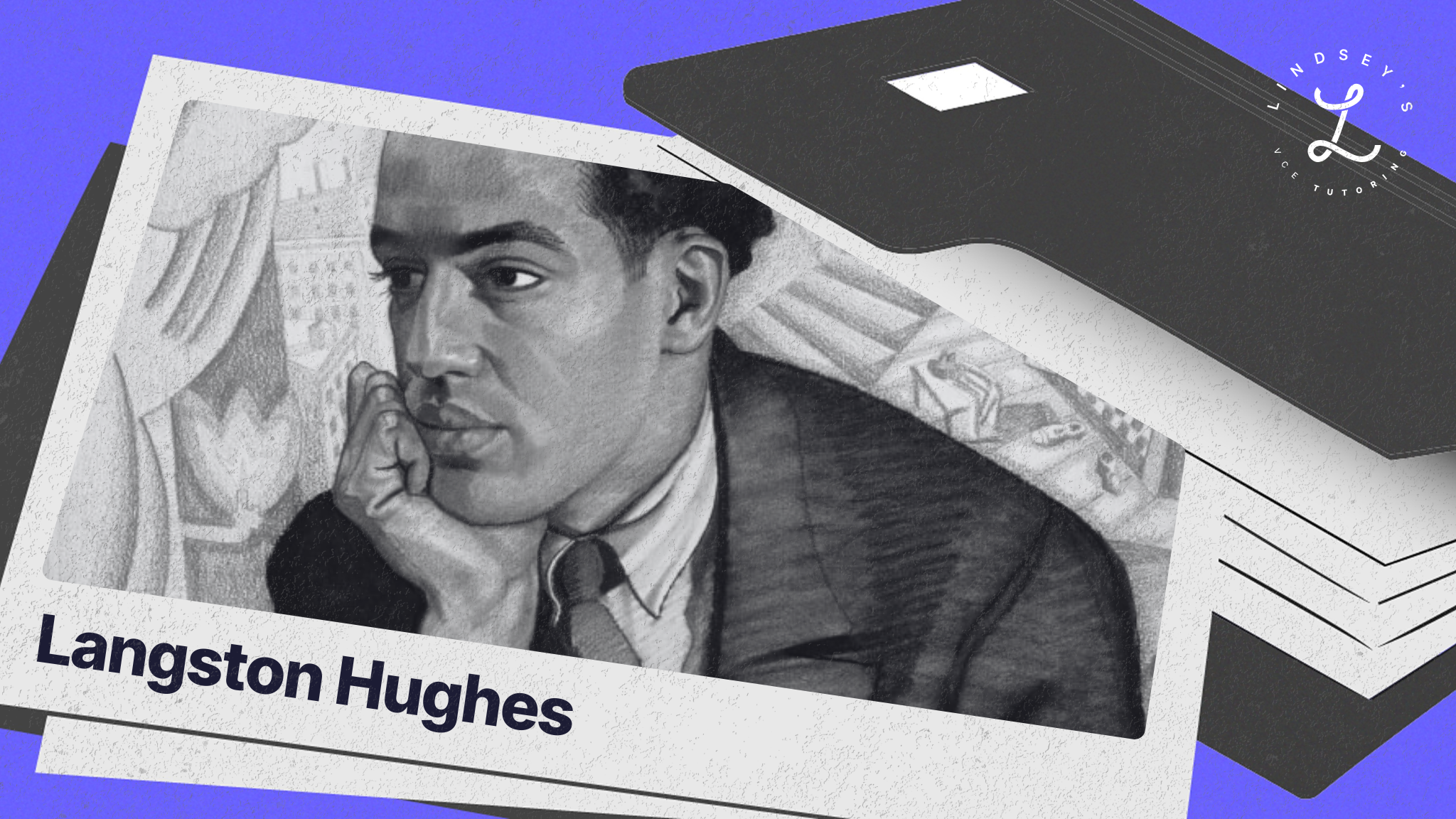
An Ultimate Guide to Langston Hughes
Langston Hughes (1901-1967) was one of the most influential American writers, whose work focused on expressing the African American experience during a time of racial injustice.
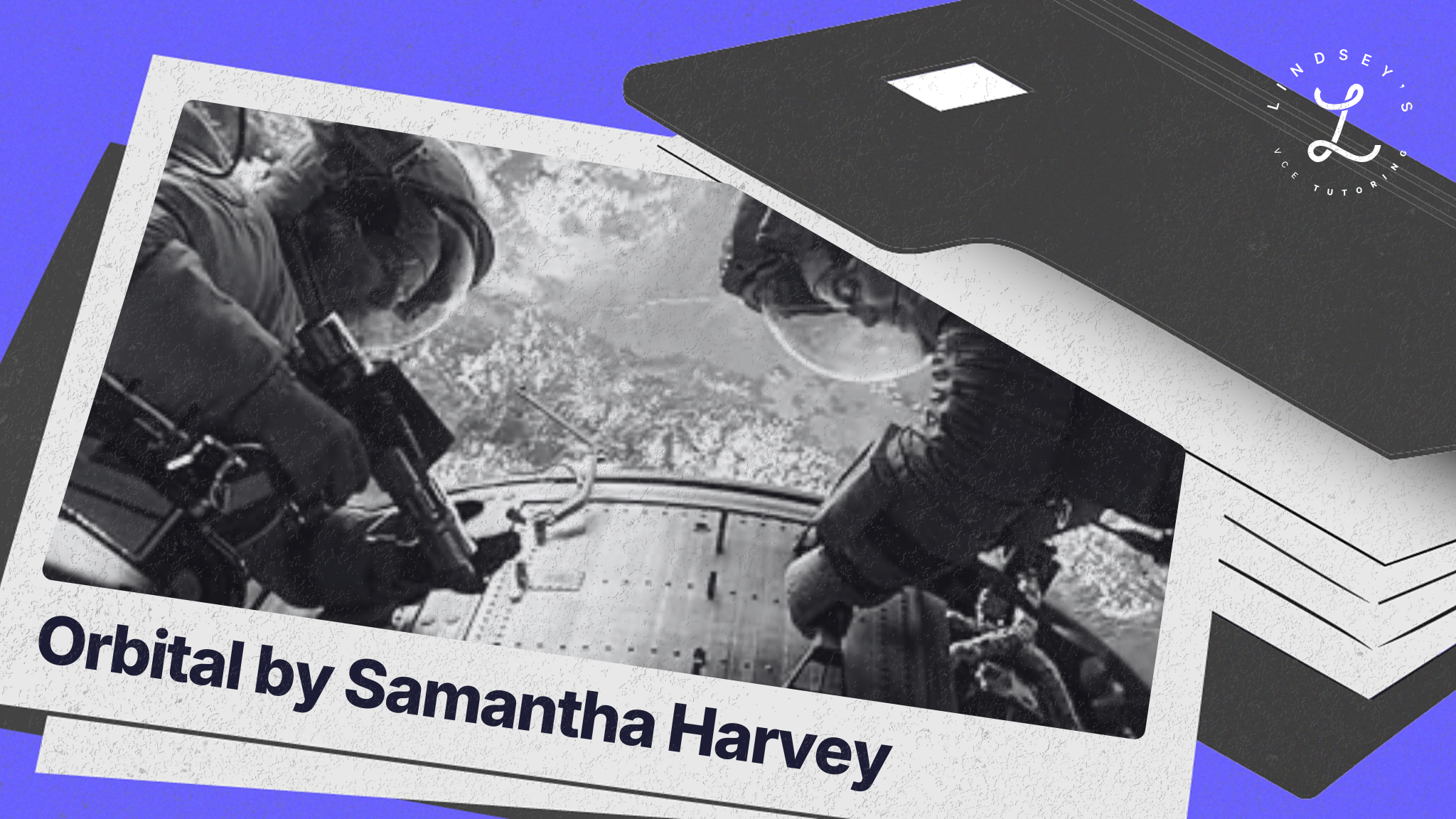
An Ultimate Guide to Orbital
Samantha Harvey’s Orbital (2023) follows a single Earth day in the lives of six astronauts aboard the international space station (ISS), hundreds of miles above earth. As they complete sixteen orbits and witness sixteen sunrises and sunsets, their distant view of Earth encourages reflection on the planet’s beauty, fragility, and the broader significance of human life.

An Ultimate Guide to Bad Dreams and Other Stories
Tessa Hadley, born in Bristol in 1956, is a British author most famous for her novels, her short stories, and her non-fiction writing. The main concerns of her writing are usually human relationships, domestic lifestyles, and family dynamics, and her writing is usually realistic rather than fantastical.