
An Ultimate Guide High Ground by Stephen Johnson

Visually depicting Australia’s Frontier Wars, Johnson’s film “High Ground” acts as a critical expośe of Colonial and Post Colonial Australia. The film highlights the discordant contrast between the picturesque landscape and the brutal spectacle of violence that takes place upon it. In doing so, Johnson delves into the notions of guilt, justice and revenge, trust and loyalty and belonging.
Opening Sequence - Close Analysis
Covering a violent chapter in the colonial history of Australia, director Stephen Maxwell Johnson and screenwriter Chris Anastassiades crafted a suspenseful drama in High Ground, whose opening sets the tone for a journey that tackles colonialism, identity, violence, and the various human responses that follow.
In its first minutes, High Ground establishes young Gutjuk’s identity as part of the Yolngu community, as well as his people’s vulnerability under the threats of colonialism. The film begins with an aerial wide shot of Nimbuwa Rock, establishing the location of the setting to be North Western Arnhem Land; the supertitles adds “1919” as the year. The opening shot is accompanied by traditional music and chants by Yolngu people, signifying their claim on the land, which remains nature’s domain and untamed by artificial forces. The audience are then introduced to the protagonist Gutjuk through close-ups of him applying white paint onto his body as part of the Yolngu peoples’ hunting traditions. The film becomes intimate in this instance, painting a sensuous image of a young boy within the gentle hands of nature. This contributes to a presentation of the Yolngu community as peaceful and in-sync with the natural world. During the hunt for a wallaby, Gutjuk scares away the animal and is told off by his father. This is an important detail pointing towards Gutjuk’s character as hasty and in need of tutelage - a key element of his identity throughout the film.
Gutjuk’s uncle Baywarra then proudly teaches Gutjuk the dances representing their totem animals. The scene plays out as the body movements of Baywarra are emphasised by the movements of the camera and the editing, which allows the dances to inhabit the frames with a haunting and resolute presence and in turns inspire respect. The cinematography here is of note - Baywarra and Gutjuk are seen inside of a rocky passage through a cave, with sand under their feet and sunlit grass surrounding them.
Again framing the characters within natural confines, the scene underlines the Yolgnu peoples’ symbiosis with the natural world. Gutjuk, in this scene, looks on to Baywarra’s dance with eyes filled with wonder, which cements the beginning of Gutjuk’s journey to become the successor to his peoples’ rich and long-standing culture. To continue, the camera covers some snapshots of the lives of the Yolngu community: women and children sitting by fire as a cooked wallaby sizzles, small houses made of straws, children in the arms of their mothers, cooing with a beautiful sense of liveliness.
Gutjuk’s mother comments that her son wants to grow up fast and that “he only wants to be with the men”. This is a commentary on masculinity and its assigned aggression, foreshadowing the main characters - all of whom are men - journeying through violence and brutality throughout the film. Through meticulous detail, High Ground’s opening minutes manage to present Gutjuk and the Yolngu people with sincerity and respect, which contribute to the impact the travesty that follows has on its audiences.
The prologue of High Ground features a brutal set piece that captures a violent massacre of the Yolngu community. Echoing the real-life Gan Gan massacre of 1911, the murderous spree the settler police subject the Yolngu people in High Ground is uncomfortably similar to reality. The scene plays out as the Yolngu community carry on their daily lives, not aware of the colonial police closing in on their location.
Travis, the other protagonist, is introduced as the sniper in this expedition’s security detail. The camera takes Travis’ point of view, peering upon the Yolngu people from a vantage point through his sniper’s scope. This camera shot communicates to the audience the vulnerability of the Yolngu community in this scene - and more broadly, their vulnerability under the power of the colonists. As Eddy, a settler policeman, sneaks up on the group of indigenous people, he startles young Gutjuk with a gun in his possession. Although the expedition was supposed to be peaceful, the misunderstanding quickly escalates into a bloodbath.
When the massacre occurs, birds screech and soar the skies, alerting elder Dharrpa of an imminent tragedy he will encounter, which cements the connection Yolngu people have with nature and their spirituality. Colonial policemen shoot and kill dozens of men, women, and children, even infants indiscriminately. The violence here is graphic.
The film uncompromisingly showcases the brutality to its audience, underlining the uneasy truth about the violent foundation on which Australia was created. This massacre is an incident evident of the tension between these two cultures and the violence that is inherent to colonialism. The brutal irony that befalls both parties is the result of the high alertness that they have against each other due to the history of violence they share. While the scene strongly impacts the characters in the story as the film carries on, its impact on the audience is of equal significance, reminding them of the complexity of the efforts and brutal failures in ending the violence in the settlers-indigenous peoples relationship.
The aftermath of the massacre sees the various demonstrations of humanity in the characters as the prologue of the film comes to a close. At this point, Gutjuk is hiding under a small body of water as his entire family fall victim to the colonists’ murdering spree. In response to the monstrous acts of his fellow officers, Travis shoots and kills the trigger-happy army personnel who killed dozens of innocent people without a second thought. He then gently rescues Gutjuk. This showcases Travis’ sense of justice and his defiance against the colonial forces but also his violence, which perpetuates the brutality that is the crux of the rift between white settlers and indigenous peoples. Gutjuk retaliates but soon submits, signalling the beginning of him being subjected to assimilation into the colonist community.
Eddy, remaining unhinged from the fight, denies the significance of him being responsible for taking the first shot that started the massacre. When Gutjuk is pulled out of the water, Eddy’s uniform is stained with blood, symbolising the responsibility he holds as an assailant in the killing of innocent Yolngu people. Later, the audience is introduced to Moran, Eddy and Travis’ superior, who suggests that they cover up the massacre. Such dishonest resolve speaks to the immorality of the colonists, but also is an example of their power. In contrast, elder Dharrpa returns to his home to find his people slaughtered and cries out it pain. Mourning his family, however, he does not think of vengeance, and tries to save the life of Baywarra, Gutjuk’s uncle and the only other survivor from the massacre. Here, Dharrpa’s character is shown to be wise and calm, not letting the tragedy cloud his judgement. However, the morality he demonstrates could also be seen as his weakness as he refuses to take direct action against those who have wrought destruction upon his home.
The prologue of High Ground is memorable for its utterly tragic massacre that demonstrated uncompromisingly the brutality and violence that the Yolngu peoples are victims of under white colonists’ reign. By capturing, within nature, the liveliness of Gutjuk and the Yolngu community in Arnhem Land, their heritage and identity are underlined and respected, which makes the tragedy that befall them more horrific. In the aftermath of the massacre, the disparity between First Nations Peoples are made more apparent as their responses demonstrate their characters.
Analysing Film Techniques:
[By Michael Chang]
When discussing these cinematic conventions in your text responses, you should follow this abbreviation: CAMELS

Camera:
- Focus on the type of shot the director uses? What angle is the shot from and what effect does this create?
- Eg. In the flashback at the start of the film, Johnson utilises handheld camera shots apparent in the slight shakiness of the frame when depicting Gutjuk’s perspective as he watches Baywara dance. As a result of this, Johnson creates a more immersive world for the audience as if they were Gutjuk themselves.
Acting:
- What was the character’s facial expression? What is their body language suggesting?
- It is important to understand that communication is not only vocal but also through expressions, mannerism and body language
- This notion is explicit through the character of Travis who is often laconic (does not speak much), however his feelings and emotions are said through his facial expressions and body language
Mise en scène:
- This wacky looking french term simply describes what the frame is composed of - eg. costume, props and position
- Looking out for minute details in frames will take your analysis to the next level as directors often leave small symbols which are hard to pick up on
- Eg. When Moran and Därrpa take a photo to commemorate the meeting, Johnson specifically places Moran in the centre, seated as if he was a monarch on the throne.
Editing:
- While a minor feature, editing can be the result of tension in key scenes
- Eg. During the prologue of the film, the directors use of parallel editing as he cuts between the idyllic lifestyle of the Indigenous and the ominous sound of the Europeans on horses galloping, is Johnson’s first subversion of typical Western film as he portrays the natives as peaceful, while the Europeans like savages.
Lighting:
- Like the use of editing, lighting is also a minor feature but it can also communicate volumes.
- Eg. Shadows can build tension, light focusing on a character can suggest they have agency, light can suggest holy and pure, while darkness can mean evil and devilish
Sound:
- When discussing sound it is important to classify sound into 2 types:
- Diegetic: sound that can be heard in the world of the film - can be heard by the characters
- Non-diegetic: sound that the director placed for the audience - cannot be heard by the characters; eg. music
- In High Ground specifically, the main discussion of sound should be of the traditional First Nations music (non-diegetic)
- Though the music is non-diegetic, it also enhances the immersion of the audience into the world of the First Nations people. Furthermore, it also at times can intensify the tragedy of losing loved ones, culture, identity and country
Quiz Time!
What is High Ground about?
Click to reveal answer
High Ground (2020) is a revisionist Western set in 1930s Arnhem Land. It follows Gutjuk, a young First Nations man, and Travis, a conflicted colonial officer, as they navigate cycles of violence, identity, and colonial power in frontier Australia.
How does High Ground depict colonialism?
Click to reveal answer
Colonialism is shown through violence, cultural erasure, and systemic power abuse. Gutjuk's forced renaming as "Tommy," the mission's assimilation program, and the massacre sequence all illustrate how colonial institutions destroyed Indigenous identity and sovereignty.
What is a revisionist Western?
Click to reveal answer
A revisionist Western challenges romanticised frontier narratives. Rather than portraying colonisers as heroic, High Ground exposes their violence and moral ambiguity while centring Indigenous perspectives, subverting the genre's traditional power dynamics.
What are the main themes in High Ground?
Click to reveal answer
Key themes include colonial authority and resistance, cycles of violence, trust and loyalty, morality and responsibility, connection to Country, and the complexity of identity. The film critiques the brutality of Australian colonisation from an Indigenous perspective.
What does the "high ground" metaphor mean in the film?
Click to reveal answer
"High ground" operates both tactically — as a combat advantage Travis teaches Gutjuk — and morally, as the ethical position advocated by Dharrpa. The film asks whether it is possible to maintain moral integrity within, or despite, a violent colonial system.
Related text guides
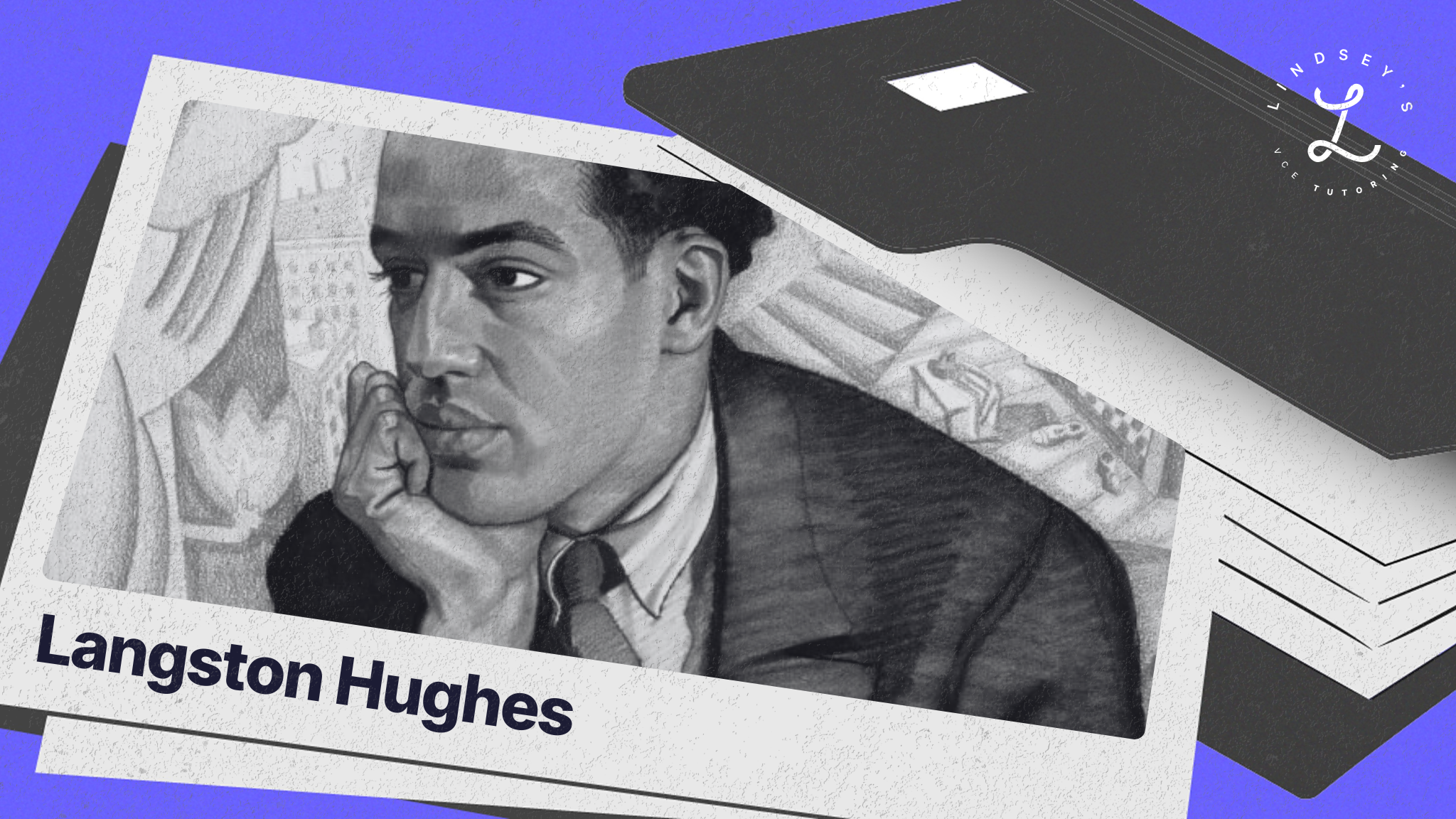
An Ultimate Guide to Langston Hughes
Langston Hughes (1901-1967) was one of the most influential American writers, whose work focused on expressing the African American experience during a time of racial injustice.
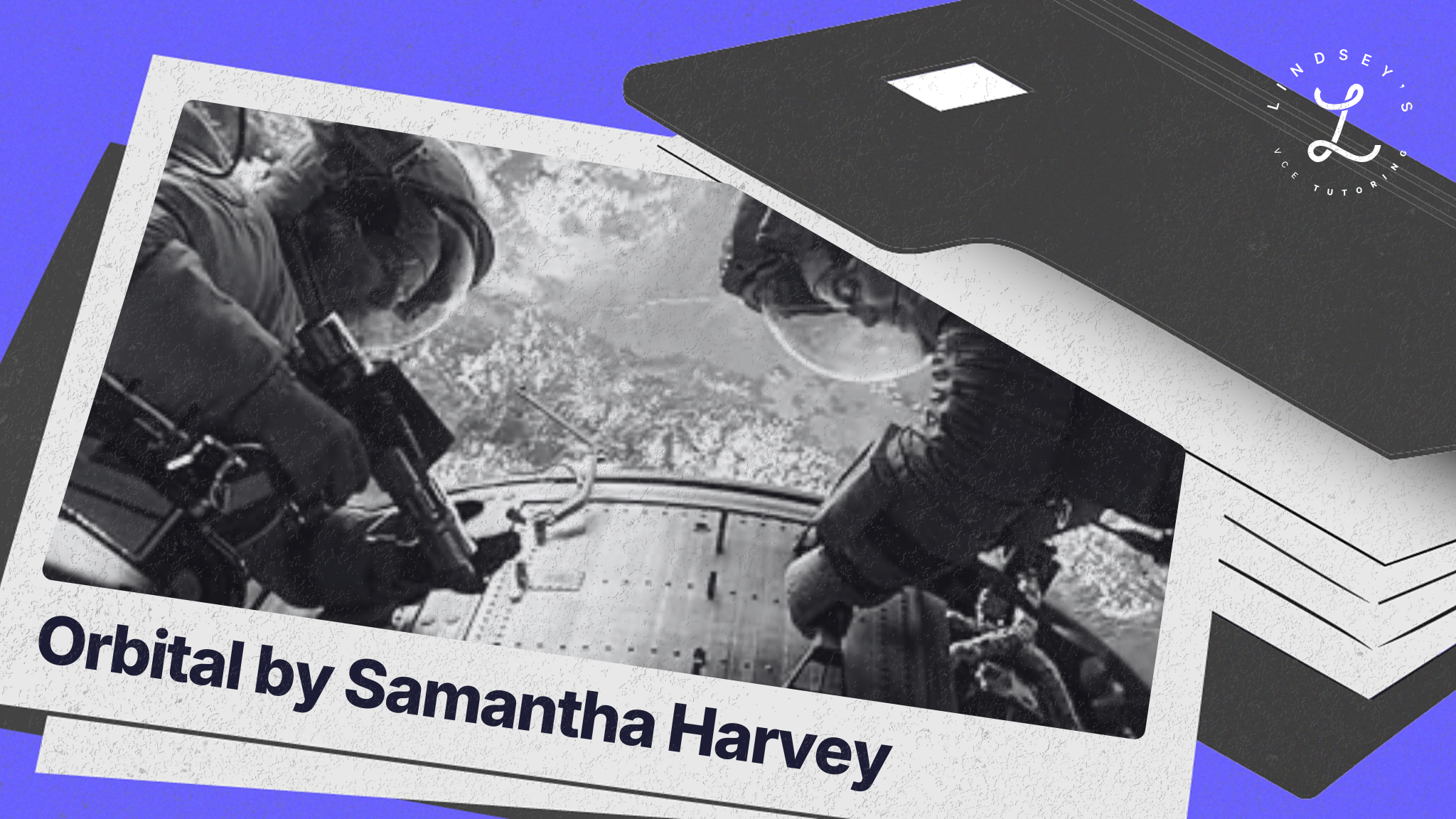
An Ultimate Guide to Orbital
Samantha Harvey’s Orbital (2023) follows a single Earth day in the lives of six astronauts aboard the international space station (ISS), hundreds of miles above earth. As they complete sixteen orbits and witness sixteen sunrises and sunsets, their distant view of Earth encourages reflection on the planet’s beauty, fragility, and the broader significance of human life.
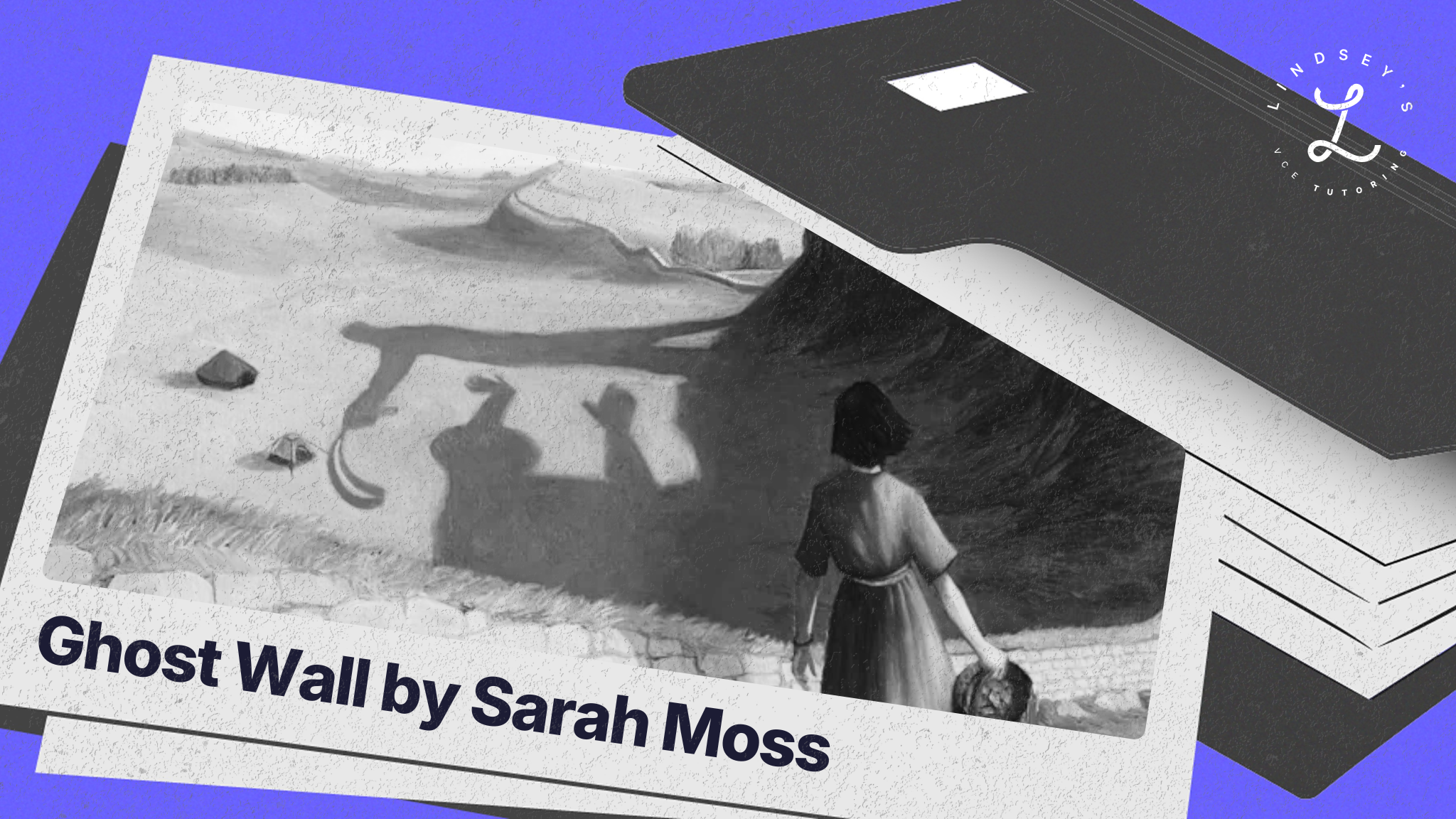
An Ultimate Guide to Ghost Wall
Sarah Moss is a contemporary British novelist, born in 1975 in Glasgow, Scotland. She is known for her literary fiction, including her novels and novellas, and typically explores themes surrounding history, loneliness, family tensions, personal relationships, patriarchy, and women’s roles in society.