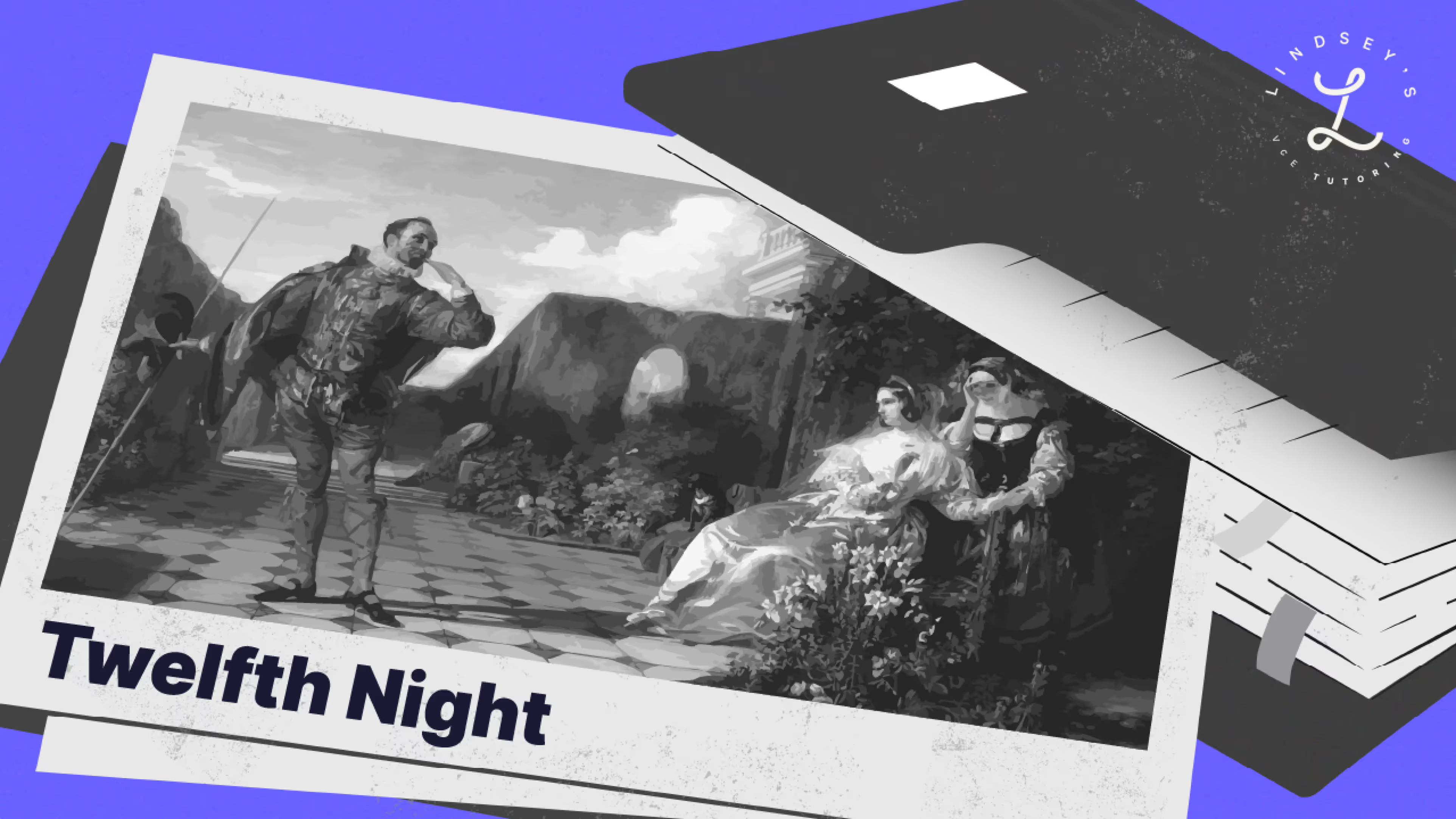
An Ultimate Guide to Twelfth Night

William Shakespeare (1564-1616) is commended in Western literature as the greatest writer in the English language and certainly the most famous playwright. His plays hold great renown and relevance owing to their astute observations of human character and society, as well as the layers of depth in his verse that create endless opportunities of literary exploration.
Context
Shakespeare wrote Twelfth Night around 1601, the same year that he wrote Hamlet, showcasing the playwright's mastery of both comedy and tragedy. The play's title refers to the 12 nights of Christmas, traditionally seen as a period for revelry, inversion and hedonism — that is, letting loose for a little while. You might be familiar with the 12 days of Christmas through the song: “On the first day of Christmas, my true love gave to me…” and so on. (Five lobster bisques, anyone?)
The 12 nights of Christmas went from the night of Christmas Eve to the night of the 5th of January and is a remnant of the ancient Roman festival of Saturnalia, which was a festival held during December 17–23 to honour Saturn, the Roman god of farming and harvest. Importantly, during Saturnalia, social order was temporarily reversed, and slaves were allowed to behave as masters for a day — this historical context has implications for the play's engagement with the themes of social class, and the topsy-turviness of not only the gender swaps that occur, but also the character's individual aspirations for class mobility (most clearly on display in the character of Malvolio).
Another important thing to remember is that Elizabeth England was an extremely male-dominated society — indeed, the impacts of the patriarchy are explored in the play itself through the women; both Viola, who borrows patriarchal power through her disguise, but also Olivia, who, as a wealthy unmarried widow, might have been cast in the likeness of the then-ruling Elizabeth I, who was also an unmarried, powerful woman. Furthermore, as women were not allowed to perform on the stage, all the female roles would have been played by boys — so it would have been a tad more believable that the Viola on the stage could genuinely have been interpreted as a boy, or a eunuch specifically, and that Cesario and Sebastian would be identically similar.
At the end of the day, Twelfth Night is a Shakespearean comedy, which, by definition, means that the play ends in marriages. In this play, the marriages symbolise the end of the eponymous “Twelfth Night”, and a symbolic progression from the night of the party on the 5th to the sober, back-to-business morning of the 6th. However, note who is and isn't married at the end of the play; importantly, Malvolio is shut out of the play's ending and appears briefly only to swear revenge on the rest of the cast before disappearing in a fuss.
Understanding some of these elements and the context of when the play was written, as well as the play's historical references to festivities, will help you analyse the themes as Shakespeare intended when he wrote.
Themes
Festivities and hedonism
At the core of Twelfth Night is the tension between order and chaos; the fight between what is normal and what is not. As mentioned in the Socio-Historical Context section above, the “Twelfth Night” of the title refers to the 12 nights of Christmas revelry and party, and the play embraces this period of topsy-turviness through class and gender inversions — for example, Viola's disguise as a man and Olivia's willingness to love a servant. Importantly, Sir Toby Belch is the epitome of unrestrained indulgence, as he drinks, parties, and shirks all his responsibilities. He represents chaos, or enjoying life's pleasures with little regard for the consequences. On the other hand, Malvolio represents self-control, austerity, and social rules. His downfall in the marriage plot is only one example of chaos 'winning' in the fight against order.
However, the play is about excess, and that is not just in the way of parties and revelry, but in the way of all emotions. Orsino begins the play with the famous lines, “If music be the food of love, play on”, telling the court musicians to indulge and heighten his emotion, so that he may continue to be melancholic — his love is performative, and he takes pleasure in making his lovesickness a part of his identity. Olivia is similarly excessive in her grief, vowing to “veiled walk”, or in other words, refuse to show her face to any man. One might ask, however: don't these people have jobs to do? Orsino is a duke — does he not have a kingdom to rule? The festivities and hedonism of the twelve nights period infects the characters so much that they seem to have no worldly responsibilities beyond indulging in what makes them happy, even if, ironically, that is to be sad.
Ultimately, Viola and Maria seem to be the two characters who are able to bring the play out of excess and back into the normal world. Viola, through her work and her proactiveness (note that of all the characters, she is one of the few that are gainfully employed; indeed, when she washes up on the shore, bereft of her brother and all her possessions, her first instinct is to go get a job), and Maria through her sensibility. It makes sense, therefore, that they should marry the lackadaisical, indulgent men of Orsino and Sir Toby Belch by the play's end, therefore reining in the characters back to the 'real' world.
Love and obsessions
As with the majority of Shakespeare's comedies, Twelfth Night centres around the antics and confusion surrounding the pursuit and outcomes of romantic relationships. Again we return to the pertinent opening line of the play: Orsino's melodramatic request “if music be the food of love, play on” suggests a gluttonous indulgence in the pleasure of love, a superficial desire that both Orsino and Olivia are struck with in their respective romantic pursuits. Too, Orsino's demand for the love-inducing music to “play on” pictures him almost as a snake entranced by the lilting melody of a charmer's flute. The two aristocrats' romantic obsessions, hence, are framed immediately as somewhat delusional, a mindless swaying to a charmer's tune rather than a conscious and thoughtful decision.
Indeed, Orsino and Olivia's perception of romantic love is highly self-indulgent and ultimately selfish. Orsino lavishly frolics in self-pity, framing himself as a hapless “hart” victim to the “cruel hounds” of desire. Truly, Orsino is anything but vulnerable and hapless - his insistent courting of Olivia and his eventual lambasting of her as “uncivil…ingrate and auspicious” reveals the lack of compassion and respect he has for a woman he allegedly loves. Olivia courts Cesario in a similarly intense way - she too laments dramatically upon being “prey” to the grip of romance, and accuses Cesario of having a “heart of stone” for rejecting her advances. The fact that Orsino and Olivia's affections shift with such ease in the final scene of the play - Olivia willing to marry Sebastian, and Orsino Viola - proves the shallowness of their romantic feelings. Here, Shakespeare illustrates the flimsiness of the line between romance and obsession, where Olivia and Orsino's feelings appear to lean more towards self-gratification and fixation. Ironically, the two are startlingly similar in their intensity and immaturity. Hence, for Orsino to court Olivia, the female version of himself, Shakespeare snidely reveals the extent of the former's narcissism - he is literally in love with himself.
However, Shakespeare's portrayal of love is not purely cynical, nor is it purely focused on romantic love. The intimate familial bond between Sebastian and Olivia is strengthened all the more by their being twins. Both siblings almost immediately mention and mourn their supposedly drowned twin in their respective introductions, cementing their love and grief for each other. Additionally, whilst the reasoning behind Viola's male disguise may be interpreted in many different ways; her statement in Act 3 Scene 4, “I my brother know / yet living in my glass”, offers a particularly poignant explanation - where Viola's grief for her beloved brother compels her to transform into him, so that she may always have him within her somehow. It is the twins' reunion in the final scene that ultimately rights all of the chaos in the play. Their severed love, now reunited, knits the rest of the cast together in perfect harmony; hence, familial love perhaps is the true centre and panacea of the play.
Class and patriarchy
Twelfth Night is very much a play about power, both in terms of economy and gender. As a period of inversion, the Saturnalia festival typically allowed for this reversal in class, where slaves could dine with masters, but Twelfth Night's ending shows that in the rigid class hierarchy of Elizabethan society, upwards social mobility and class improvement is nothing but a fancy dream.
The characters are delineated by class as follows:
- Orsino: the Duke, and therefore of the upper class
- Olivia: also of the upper class, wealthy and not needing to work but also not reliant on her husband financially anymore
- Malvolio: a servant to Olivia, with aspirations to improve his class standing
- Maria: a servant, but one who is able to blur the lines between classes through her wit and intelligence; her marriage to Sir Toby at the end of the play is the play's only sign of genuine upwards mobility
- Feste: a fool, and therefore of low status, but ironically is one of the wisest in the play
- Sir Toby Belch: a nobleman, but one who enjoys associating with the servants and does not behave typical of the aristocracy
- Sir Andrew Aguecheek: a nobleman, but one who is manipulated and extorted due to his stupidity
- Viola and Sebastian: of noble rank, but Viola interestingly chooses to disguise herself as a servant
Throughout the play, there are some notable examples of power inversions. Viola, by disguising herself as a man, is able to protect herself as a woman in a patriarchal society by seizing (or at least borrowing) some male privilege; Olivia, by rejecting men and refusing to see any, does a similar thing. The Duke's obsession with Olivia and his somewhat pathetic emotional state also has the feeling of some inversion, as he plays a subservient and pleading role in that dynamic. Sir Toby and Sir Andrew are both so stupid and unbecoming of aristocracy that the “Sir” at the start of their name begins to feel mocking and sarcastic before long.
However, with the play's ending, the inversions are fixed. Viola sheds her disguise and becomes a wife. Olivia, who had previously vowed to reject men, marries a man — importantly, she is also silenced; she never responds to the revelation that Sebastian and Cesario are two different people, and considering that she fell in love with Cesario due to his wit and personality, one is left to wonder whether the outward resemblance will be enough. Sir Toby is reined in by marrying Maria. Antonio — whose relationship with Sebastian is arguably rather homoerotically coded — is cast aside, and so is Malvolio, whose hubris and self-importance led him to believe that he could truly become a noble.
Indeed, the only character by the end of the play who has successfully managed to invert their fate is Maria, who Shakespeare has consistently presented as intelligent enough to compensate for her low standing — and even she only goes from being confined as a servant to being confined as a wife.
Performativity and disguises
The theme of performativity and disguises is at the core of Twelfth Night. In many ways, the play's various disguises are the catalyst for everything that happens, from the various romantic entanglements to the inversions of order and class. Most obvious is, of course, Viola's disguise as Cesario. As a lone woman wrecked at sea, who has lost her immediate family and belongings, Viola's decision to mask her womanhood and assume the male form allows her to borrow some patriarchal privilege, navigating Illyria's male-dominated society and accessing authority that would otherwise be impossible for her as woman.
In contrast to Viola's disguise as a man is the equally physical but opposingly unsuccessful 'disguise' that Malvolio dons, when he puts on the yellow cross-gartered stockings in a pathetic attempt to impress Olivia and, by extension, climb the social ranks of Illyria through marriage. Whereas Viola's disguise protects her by acting as a shield against the outer world (similarly to Olivia's physical barrier of the veil), Malvolio's ironically strips him of his artifice and exposes his deepest insecurities, his flaws and his humiliating desires. Shakespeare shows that physical disguises can be powerful devices for both defence and assault.
Performativity also ties in with many of the other themes discussed in this guide already. Feste's successful performance as Sir Topas, not to mention the success of Viola's performance as a man imply that both class and gender is performative — essentially, we are not who we are, but who we tell people that we are. Confusion hits its peak when Viola tells Olivia imploringly “I am not what I am” — in this case, the audience is left to question, how much of her is Cesario? How of the performance is real? And how much of our own identities would remain if we no longer needed to perform them for the sake of other people?
Gender fluidity and queerness
Characteristic of Shakespeare's comedies, Twelfth Night ends with the heteronormative marriages that tie a neat bow around the disarray and confusion in the play. Yet, Shakespeare bends the strict boundaries of gender and sexuality, creating a gold mine for a lens of queer theory. The seemingly heterosexual marriages at the end of the play carry an inherent queerness: Orsino continues to refer to Viola as “boy” and “Cesario”, and Olivia's love for Sebastian is simply a projection of her love for Cesario - a woman in disguise.
The awkwardness of the love triangle in the play hinges on the fact that heteronormativity is the unquestioned and immutable societal standard. Olivia's love for Cesario is comedic because Cesario is, of course, really a woman - and a romantic relationship between two women is inconceivable. Similarly, Viola's love for Orsino is difficult because she is disguised as a man, and similarly - despite Orsino's obvious fondness of Cesario that veers into homoeroticism - a romantic relationship between two men is impossible.
The queerness of the play surfaces not only in the ambiguity of sexuality but that too of gender. Cesario/Viola is emblematic of the non-binary body, traversing a liminal space between the two poles of gender identity - man and woman. Ultimately, in conservative society, such a liminal identity cannot exist. One must separate, one must split and one must conform. Sebastian's appearance in Illyria allows Viola to cast off the masculine aspects of her once-hybrid gender, of which her twin takes up the mantle. Sebastian is the one who successfully fights for Olivia's hand (however unwittingly) and marries her - fulfilling the role of noble Elizabethan man.
Juxtaposing the joyous marriages at the end of the play is Antonio's lack thereof. Throughout literary criticism, Antonio has commonly been interpreted as a queer man who harbours romantic feelings for Sebastian. Indeed, Antonio's pure devotion and sacrifice for Sebastian is a far grander and sweeter gesture of love than the shallow, melodramatic pursuits that Shakespeare displays amongst the nobles - but there are no happy endings for those who are Other, and Antonio's fate is one relegated to loneliness and ostracisation.
Textual features
Symbolism
Clothing and jewellery are visual signifiers of structures of identity - including gender and class - and the distortion of this societally assigned costume throughout the play illustrates the flimsy nature of these identities. The most intuitive example is Viola's transformation into Cesario simply by donning man's clothes, a process she reverses - and notably can only reverse fully - by returning to “maiden's weeds”. For Viola, gender is inextricably tied to clothing, and hence she is able to move along this spectrum of identity.
Malvolio's ridiculous yellow cross-gartered stockings is another pertinent example. Inherent in his decision to follow Maria's instruction in the fake letter is the assumption that if he dresses as Olivia's lover, he will become Olivia's lover; just as how Viola becomes a man (Cesario) simply by dressing so. The causal relationship between clothing and identity, however, does not apply to Malvolio, the object of ridicule and black sheep in Twelfth Night. Unlike Viola, who successfully traverses the lines of gender and reputation through clothing, Malvolio's identity and his place in Illyria's hierarchy is immutable, and his costume change only mocks him further.
The sea and storm that bring Sebastian and Viola to Illyria are also rich with symbolism. Generating excitement and demanding the audience's attention, the tempests that Shakespeare features in many plays serves as a dramatic device as well as an emblematic one. Chaos and tumult are all encapsulated within the turbulence of a storm, establishing the mayhem and disorder of the play. The ocean too exists as a symbol of rebirth, antithetical to Sebastian's belief that it represents a “tomb”. After all, the sea does not merely spare both twins - it also spits out the intangible liminal figure of Cesario. It is a creative force, not purely a destructive one.
Music
Music is often used in Shakespeare's plays to add dramatic interest or establish mood, but its place in Twelfth Night is especially poignant. Orsino constantly calls for music throughout the play, signifying his melodramaticism and his constant desire for a pleasurable atmosphere. Yet, the vapid indulgence of Orsino's music contrasts with the music of Feste's songs; these are tonally at odds with the lightheartedness of the play. In Act 2 Scene 3, he sings in a sobering reminder of mortality and the temporality of love:
Youth's a stuff will not endure.
The grimness of love is also revisited in the Fool's song in Act 2 Scene 4, which speaks morbidly of heartbreak:
Come away, come away, death,
And in sad cypress let me be laid.
Fly away, fly away, breath,
I am slain by a cruel fair maid.
Hence, beneath the festivities and antics of the play, an undercurrent of tension and misery pulses through the acts. The joy of Twelfth Night may just be a performance as temporary as the festival of Epiphany. As the play closes, we are left with this song:
For the rain it raineth every day.
Life, the Fool sings, is full of unavoidable hardships, as cyclical as the rain that “raineth every day.” Indulgence and celebration is simply a temporary interval in the eternal toil that constitutes the act of living.
Quiz Time!
What is Twelfth Night about?
Click to reveal answer
Twelfth Night is a comedy by Shakespeare written around 1601. It follows Viola, who disguises herself as a man after a shipwreck, and becomes entangled in a love triangle involving Duke Orsino and Countess Olivia, exploring themes of love, identity, and class.
How does Twelfth Night explore love?
Click to reveal answer
Shakespeare presents love as largely performative and self-indulgent. Orsino is obsessed with the idea of love, and Olivia's grief is theatrical. True love — symbolised by the reunion of Viola and Sebastian — only restores harmony when disguise is shed and reality is faced.
What are the main themes of Twelfth Night?
Click to reveal answer
Key themes include the nature of love, gender and identity, class and social mobility, folly and disguise, and the tension between festivity and order. Shakespeare uses comic inversions to expose the absurdity of rigid social hierarchies and self-deception.
What is the role of class in Twelfth Night?
Click to reveal answer
Class is central to the play's power dynamics. Malvolio's ambition to rise above his station is cruelly punished, and genuine upward mobility is rare. Shakespeare uses the Saturnalia festival of inversion to highlight how rigid class structures ultimately reassert themselves.
How does Shakespeare explore gender in Twelfth Night?
Click to reveal answer
Viola's male disguise allows her to navigate a patriarchal world and protect herself. Yet the play ultimately restores gender norms — Viola becomes a wife and Olivia is silenced at the ending — suggesting the limits of gender inversion within Elizabethan society.
Related text guides
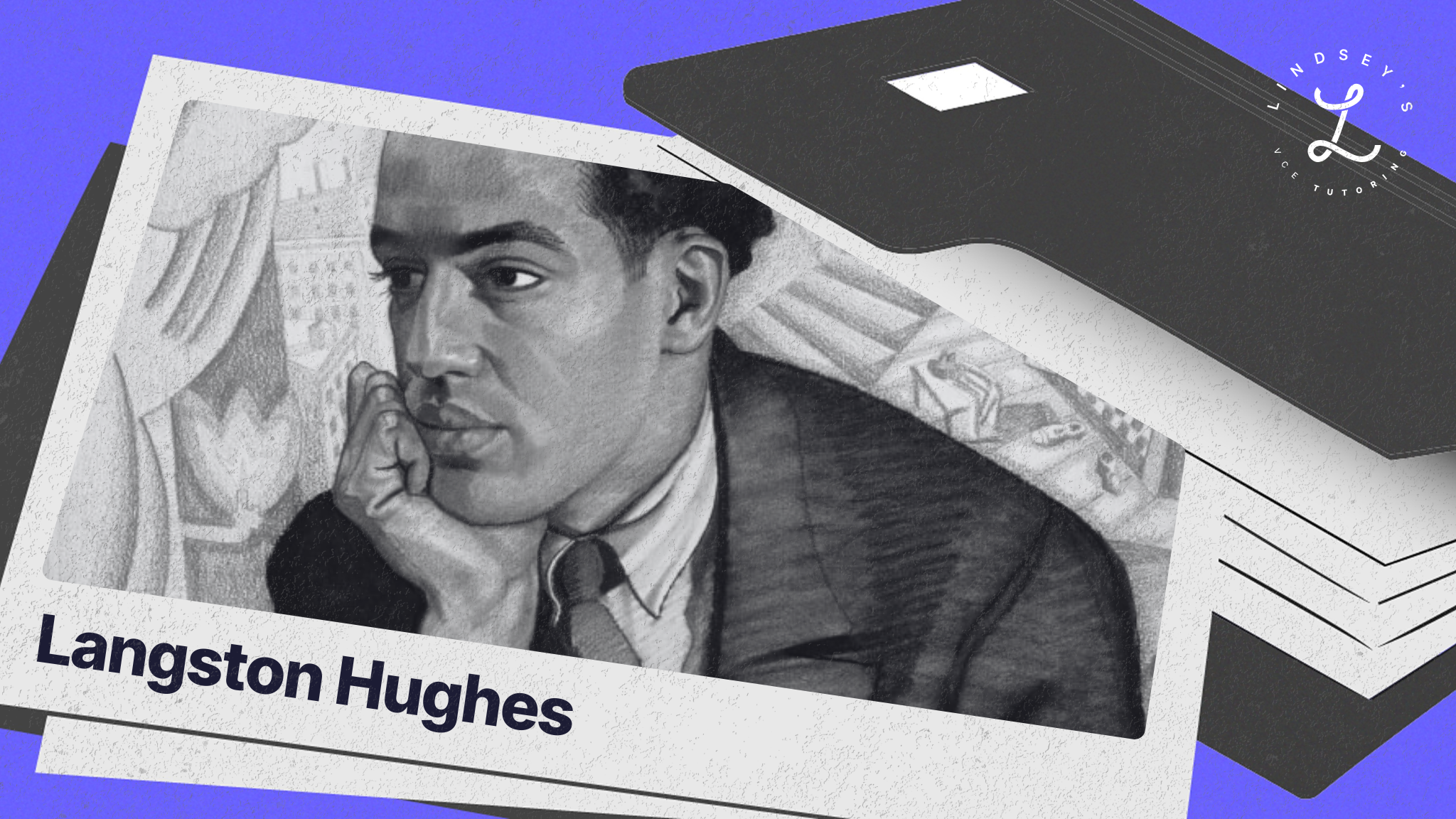
An Ultimate Guide to Langston Hughes
Langston Hughes (1901-1967) was one of the most influential American writers, whose work focused on expressing the African American experience during a time of racial injustice.
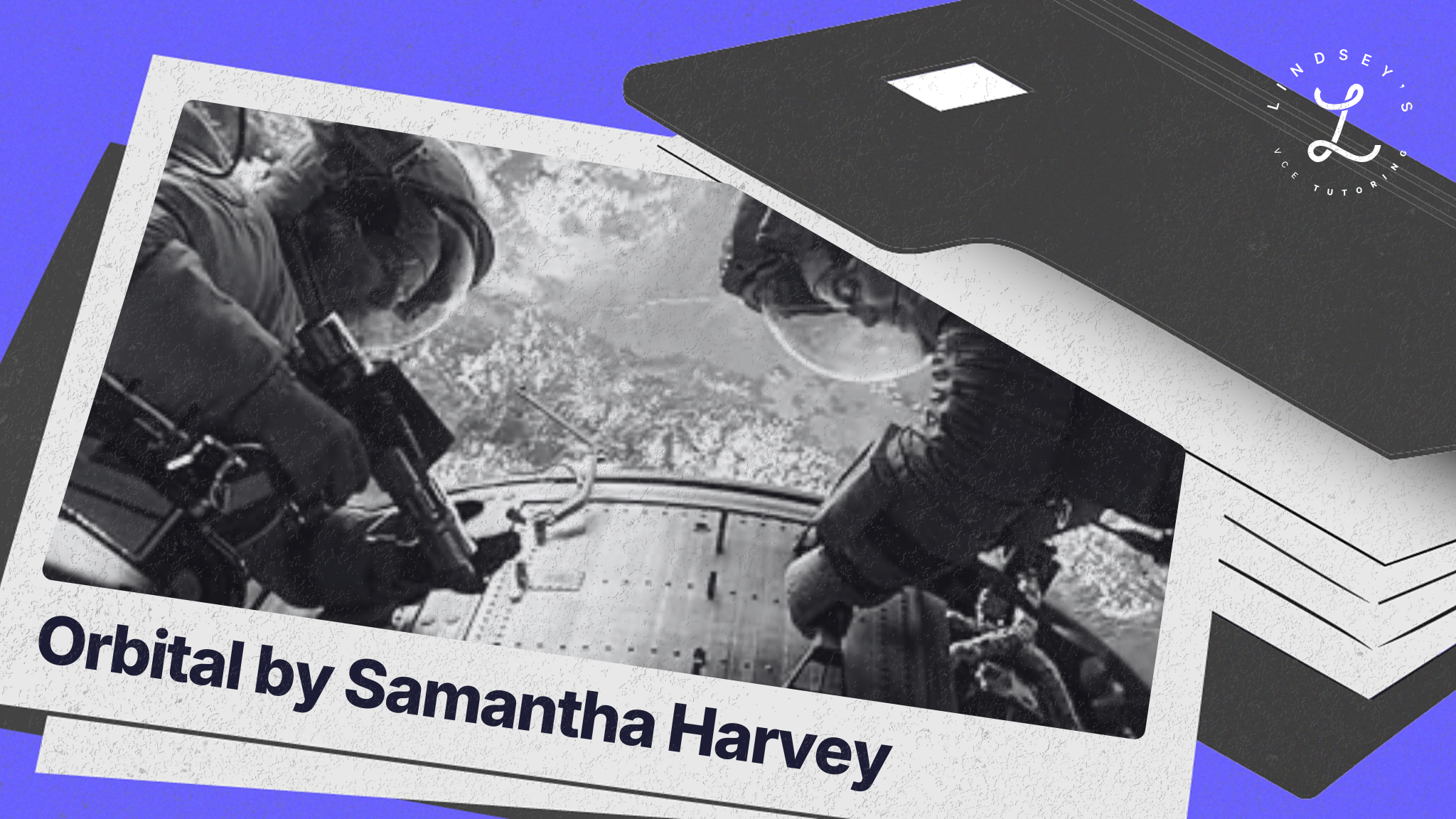
An Ultimate Guide to Orbital
Samantha Harvey’s Orbital (2023) follows a single Earth day in the lives of six astronauts aboard the international space station (ISS), hundreds of miles above earth. As they complete sixteen orbits and witness sixteen sunrises and sunsets, their distant view of Earth encourages reflection on the planet’s beauty, fragility, and the broader significance of human life.
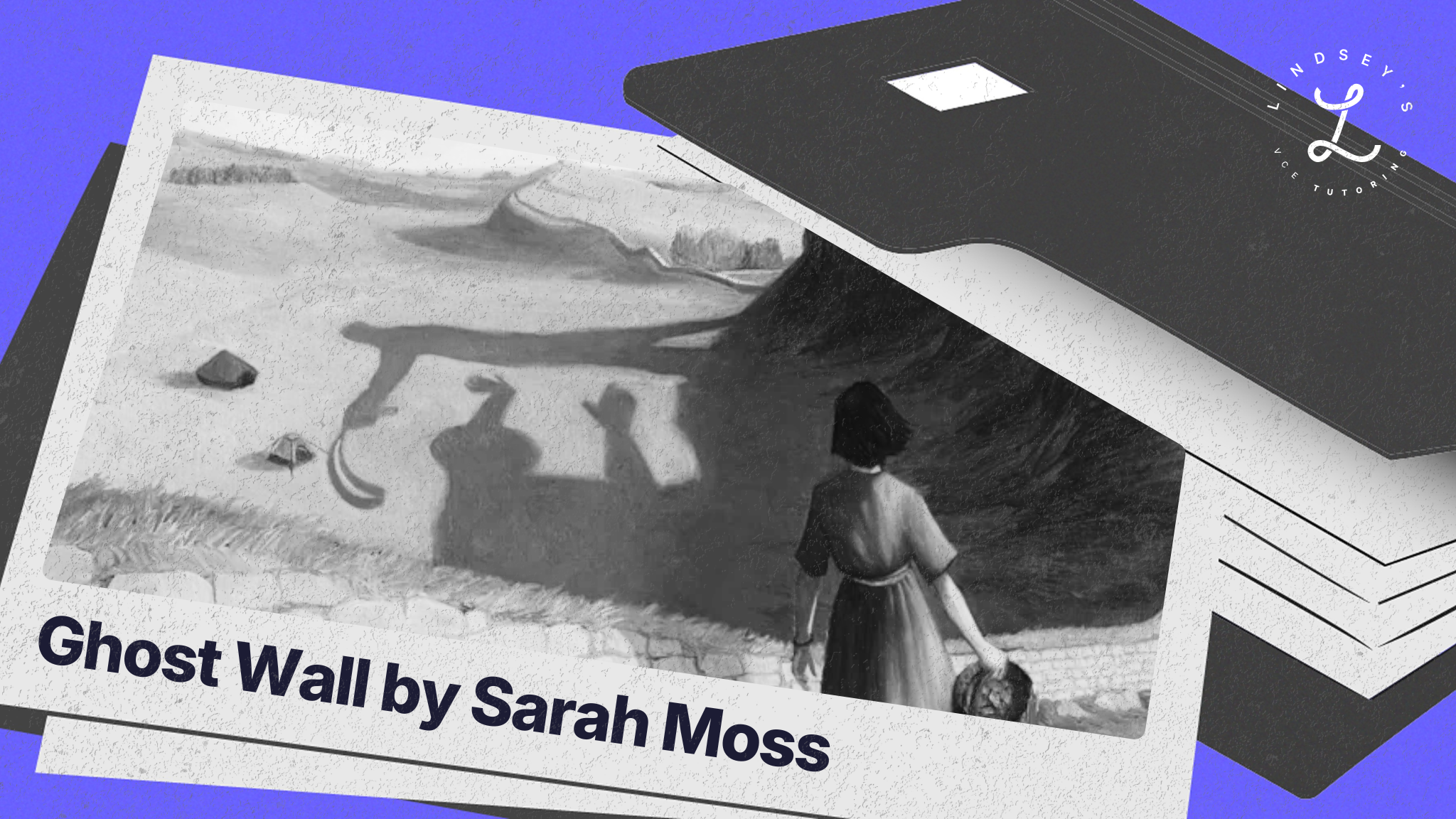
An Ultimate Guide to Ghost Wall
Sarah Moss is a contemporary British novelist, born in 1975 in Glasgow, Scotland. She is known for her literary fiction, including her novels and novellas, and typically explores themes surrounding history, loneliness, family tensions, personal relationships, patriarchy, and women’s roles in society.