
An Ultimate Guide to Born a Crime

Trevor Noah is a South African comedian, writer, and political commentator. He is known for hosting the satirical news program ‘The Daily Show.’ Born in South Africa in 1984, Noah grew up under apartheid and witnessed the turbulent process of its downfall in 1990. Under apartheid legislation, Noah’s mother was classified as Black, while his father was classified as white, making Noah fall under the castigated classification of ‘coloured.’ Due to apartheid’s ban on interracial relationships, Noah’s birth and existence was defined as illegal, hence the title of the memoir.
Socio-historical context
Noah's personal history is inextricably linked to South Africa's national history, particularly apartheid. His life story offers a microcosmic view of the broader socio-political changes and the legacies of the nation’s turbulent past.
The legacies of Dutch colonialism
Noah represents modern day South Africa as a postcolonial country still suffering from the spectre of colonisation. In 1652, Dutch settlers (later to be known as ‘Afrikaneers’) colonised what is known today as South Africa. The white minority, composed primarily of Dutch settlers, exploited the Black majority that consisted of diverse ethnic groups. The Dutch employed a ‘divide and conquer’ strategy, encouraging ethnic conflict amongst the Indigenous tribes in order to assert control over them. The memoir bemoans the postcolonial trauma that continues to define South African society and politics, with Dutch colonisation and apartheid representing a largely unhealed wound for many Black South Africans who continue to experience the inequalities caused by historical oppression.
Apartheid
Apartheid was the ideology and system of racial segregation introduced in South Africa in 1948 by the National Party (NP). Apartheid laws forced different racial groups to live and ‘develop’ separately; it made inter-racial marriage illegal, forced ‘coloured’ people out of the cities (and into townships), prohibited them from owning property or land, and largely made it impossible for Black South Africans to empower themselves socially, economically, and politically. Noah’s use of humour exposes the absurd and illogical nature of this racial ideology, while simultaneously exposing the devastating impacts it had on oppressed groups.
Nelson Mandela has become the iconic representation of apartheid’s fall. Mandela spent 27 years in prison for leading the African National Congress (ANC) which rebelled against the apartheid regime. Upon his release from prison, Mandela led negotiations with the government to end apartheid. For many, this was an opportunity for freedom; however, it also led to uncertainty and depression, as many who had spent their lives trying to curate their whiteness, now felt as though their hard work had been made redundant.
Themes
Prejudice, conflict and injustice
The illegality of Noah’s birth exemplifies the systemic racism and legal injustices prevalent in South Africa. His mixed-race identity made him a literal product of a crime, embodying the absurdity and cruelty of apartheid laws. Noah's experiences of racial and class-based discrimination, including the minibus incident and his struggles in school and jail, underscore the deep-rooted societal prejudices of South African society. Tribal conflicts, as depicted in the Zulu vs. Xhosa incidents, further illuminate the internalized prejudices within black communities, exacerbated by the apartheid regime's divide-and-rule tactics.
In the face of such injustice, Noah celebrates glimpses of resistance; he honours his mother’s rebelliousness and aspirations, asserting that ‘she had a level of fearlessness’. His own struggle to circumvent and overcome apartheid’s illogical rules is foregrounded throughout the novel. Furthermore, although Trevor comes to face countless injustices throughout his youth, his writing serves to prompt continuous reflection on the moral values that guide individuals and societies; he is interested in understanding different conceptions of ‘right’ and ‘wrong’ and how these arise. Much of his writing, though satirical, is also extremely empathetic - despite struggling to understand his mother’s religious faith, for instance, he understands the appeal of Christianity for struggling Black South Africans. No stranger to finding loopholes in the system, Noah’s own ethical framework is shaped by his experiences and aspirations.
Gender roles and relationships
Trevor Noah's upbringing by strong women and his observations of their roles in society shed light on the gender dynamics in South Africa. His mother's struggle against traditional gender expectations, and her determination to be independent, provides a powerful feminist narrative. The memoir also touches upon the toxic masculinity and sexism prevalent in the society, as seen in the abusive behavior of his stepfather and the misogyny of the Zulu minibus driver.
The complexity of human relationships links to this central theme, with Noah's relationship with his mother forming the emotional backbone of the memoir. His mother's tough love, combined with her sacrifices and resilience, illustrates the multifaceted nature of parental love. These loving relationships also contrast against the broken, abusive relationship between Patricia and Abel, which reflects the toxic nature of patriarchal culture in South African society.
Romantic endeavours and lessons in love also come to shape Noah’s identity and life experiences, informing his understanding of family, love, and belonging.
Identity, belonging and language
Noah’s ability to navigate various languages allows him to transcend cultural barriers, yet he also confronts the challenges of not fully belonging to any single group. His mixed-race heritage places him in a liminal space, grappling with identity and belonging in a society rigidly divided by race. The struggle to belong thus becomes a recurring dilemma throughout Noah’s childhood; even after the fall of apartheid, the importance of group membership - often defined by racial identity - continues to define his experiences at school and his neighbourhood.
Noah further interrogates how tribalism can sometimes become a substitute for reconciliation; due to racism and subsequent mistrust of the Other, South African ethnic groups found belonging along racial lines, even in post-apartheid society. Noah, who occupies a liminal space in this highly racialised society, thus struggles to find membership in any group (some see him as ‘too’ white - others as ‘too’ black).
In this context, language and humour becomes both a tool and coping mechanism in the face of these barriers, as Noah finds that the ‘quickest way to bridge the race gap was through language’ (p. 54). When all else fails, humour is used as a coping mechanism for alienation and struggle, as evocatively explored in instances of Noah and Patricia “laughing together through the pain.” Language should be understood in this context as having multiple dimensions - humour, laughter, and other non-verbal forms of bonding and communication are ‘languages’ just as much as English, Zulu, Xhosa, etc.
Power and indepdence
The power dynamics within Noah's family, particularly between his mother and stepfather, reveal the struggles for control and autonomy within personal relationships. Conversely, Noah's journey to self-sufficiency through entrepreneurial endeavors like selling CDs and DJing reflects his perseverance and adaptability, qualities that enable him to overcome the limitations imposed by his background and society. Noah’s personal struggle for independence largely mirrors South Africa’s broader struggle for independence as well, as the novel intertwines personal and political histories.
Textual features
Humour as a tool of critique
Trevor Noah’s humorous, self-autobiographical memoir ‘Born a Crime’ employs comedy as an unconventional yet powerful tool to explore the struggles of living in apartheid and post-apartheid South Africa. Though humour is presented as a way to cope with trauma and hardship, the memoir also represents comedy and satire as a tool for postcolonial critique, enabling Noah to expose the absurdities of apartheid.
For both Noah and us, as readers, humour becomes a bridge between worlds - a poignant reminder that in the face of oppression, laughter can reveal truths that pain alone cannot articulate.
The memoir form
The autobiographical nature of Noah’s writing enables him to intertwine national, social, and personal history. The narrative oscillates between the harsh realities of apartheid’s oppressive systems as well as the cultural and political tensions among South Africa’s diverse ethnic (tribal) groups. Through the narrative lens of the memoir, readers witness not only the broader socio-political landscape but also the intimate impact of these forces on Noah’s own childhood. Consequently, the memoir serves a profound function - that to illuminate the interconnections of collective and individual histories.
Non-linear chronology
The non-linear chronology eschews a simple chronological recount for a more nuanced exploration of themes and ideas. This organisation is thematic rather than strictly chronological, allowing Noah to interweave anecdotes across time frames, creating thematic resonances rather than a linear narrative. Themes, moments and people are juxtaposed against one another, revealing layers of Noah’s history and identity. As the memoir moves backwards and forwards in time, Noah’s identity is gradually deconstructed and reconstructed as a product of both his own oppression and agency/resistance.
Symbolism
Cars
My mom had this ancient, broken down, bright-tangerine Volkswagen Beetle [...] As shitty as our car was, it was a car. It was freedom. We weren’t black people stuck in the townships, waiting for public transport. We were black people who were out in the world. We were black people who could wake up and say, “Where do we choose to go today?”
The ‘Volkswagen Beetle’ functions as a symbol of freedom and independence in the memoir, offering Noah and Patricia opportunities for self-sufficiency. The ‘broken-down,’ ‘shitty’ nature of the car evidently suggests that this self-sufficiency was limited, yet in proclaiming that ‘we were black people who were out in the world,’ Noah celebrates this limited independence. The fact that in Soweto, ‘almost everyone had a driveway’ but no car, as if they were ‘willing the car to happen,’ further reinforces this motif. In a society where the white government restricted the movement of Black people and denied them access to public transportation, cars symbolized a limited kind of freedom.
Trevor’s poop
Sadly, no matter how fancy you made your house, there was one thing you could never aspire to improve: your toilet … Mission accomplished.
The fact that we can speak of Trevor’s poop as symbolic really highlights the memoir’s emphasis on humour and comedy to communicate meaning. This passage, rooted in the mundane act of defecation, becomes a powerful commentary on dignity and humanity - condemning the deplorable conditions of the townships, where ‘you could never aspire to improve’ even ‘your toilet,’ Noah underscores the dehumanizing effects of poverty and racial segregation.
The Mulberry Tree
At the end of our street in Eden Park, right in a bend at the top of the road, stood a giant mulberry tree growing out of someone’s front yard. Every year when it bore fruit the neighborhood kids would go and pick berries from it, eating as many as they could and filling up bags to take home. They would all play under the tree together. I had to play under the tree by myself. I didn’t have any friends in Eden Park
The mulberry tree paradoxically symbolises both belonging and exclusion. The tree, with its abundant ‘fruit,’ fosters a sense of community for the neighbourhood children, yet Noah is excluded from such belonging. The image of Noah playing ‘under the tree’ by himself, followed by the frank admission that he ‘didn’t have any friends in Eden Park,’ poignantly highlights his outsider status and longing for connection. The tree thus represents Noah’s struggle to find his place in a society divided by rigid categories of race.
Chameleon
I became a chameleon. My color didn’t change, but I could change your perception of my color. If you spoke to me in Zulu, I replied to you in Zulu. If you spoke to me in Tswana, I replied to you in Tswana. Maybe I didn’t look like you, but if I spoke like you, I was you.
Noah's metaphorical self-reference as a "chameleon" whose "colour didn’t change," but whose "perception of [his] colour" could, highlights his agency and adaptability in South African society. Despite being ostracized due to his mixed racial identity, Noah employs language as a tool to transcend racial boundaries and gain acceptance.
Toffee Apple
One Sunday we were at the shops and there was this big display of toffee apples. I loved toffee apples, and I kept nagging her the whole way through the shop. ‘Please can I have a toffee apple? Please can I have a toffee apple? [...] ‘She’s buying it for me’ [...] ‘Are you lost, little boy? Where’s your mother?’’
Patricia’s deceptive trick serves as a lesson on the pervasive prejudices of apartheid society; through this incident, Noah is abruptly confronted with the stark reality that his familial bond with his own mother can be questioned and denied based solely on external perceptions shaped by racist ideology. The toffee apple, initially a symbol of childish desire, becomes a symbol of the harsh realities of race and identity in apartheid South Africa.
Quiz Time!
What is Born a Crime about?
Click to reveal answer
Born a Crime is Trevor Noah's 2016 memoir about growing up in apartheid and post-apartheid South Africa as the mixed-race child of a Black mother and white father. His birth was literally illegal under apartheid law, and the memoir explores race, identity, and resilience.
What are the main themes of Born a Crime?
Click to reveal answer
Key themes include racial prejudice and injustice, identity and belonging, the power of language and humour, family — particularly the relationship with his mother Patricia — and the legacy of colonialism and apartheid on South African society.
What role does language play in Born a Crime?
Click to reveal answer
Language is Noah's primary tool for navigating racial boundaries. By speaking Zulu, Xhosa, or Tswana, he gains acceptance across divided communities. He argues that speaking someone's language signals "I am you" — transcending apartheid's rigid racial categories.
How does Trevor Noah use humour in Born a Crime?
Click to reveal answer
Noah uses comedy as both a coping mechanism and a tool of postcolonial critique. Humour exposes the absurdity of apartheid's racial logic while allowing Noah and his mother to navigate trauma. As he writes, laughter becomes a "bridge between worlds."
How does Born a Crime portray the legacy of apartheid?
Click to reveal answer
Noah shows that apartheid's end did not erase its damage. Poverty, tribal conflict, internalised racism, and systemic inequality persisted into the post-apartheid era. The memoir reveals how colonialism and apartheid left an "unhealed wound" in South African society.
Related text guides
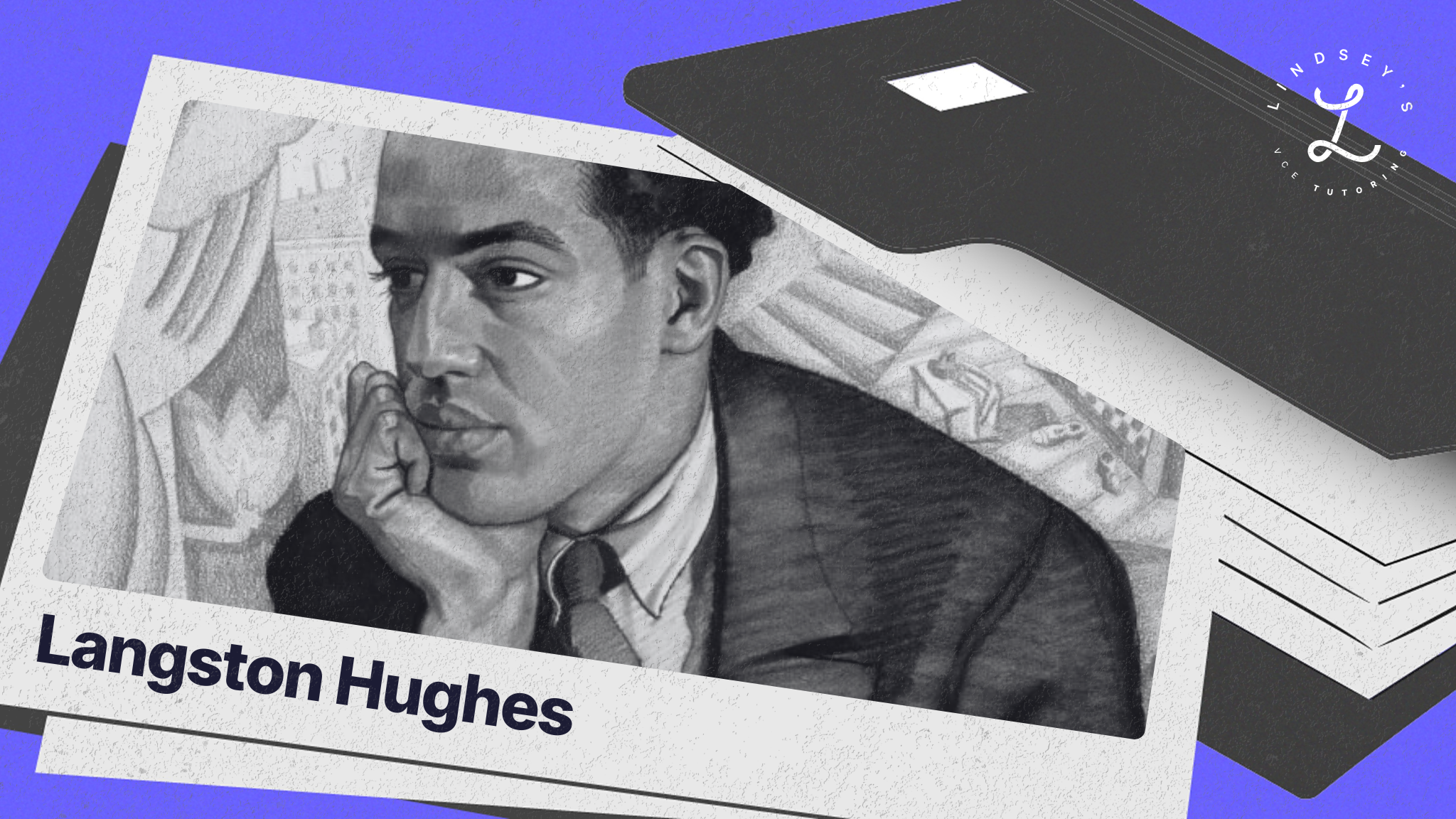
An Ultimate Guide to Langston Hughes
Langston Hughes (1901-1967) was one of the most influential American writers, whose work focused on expressing the African American experience during a time of racial injustice.
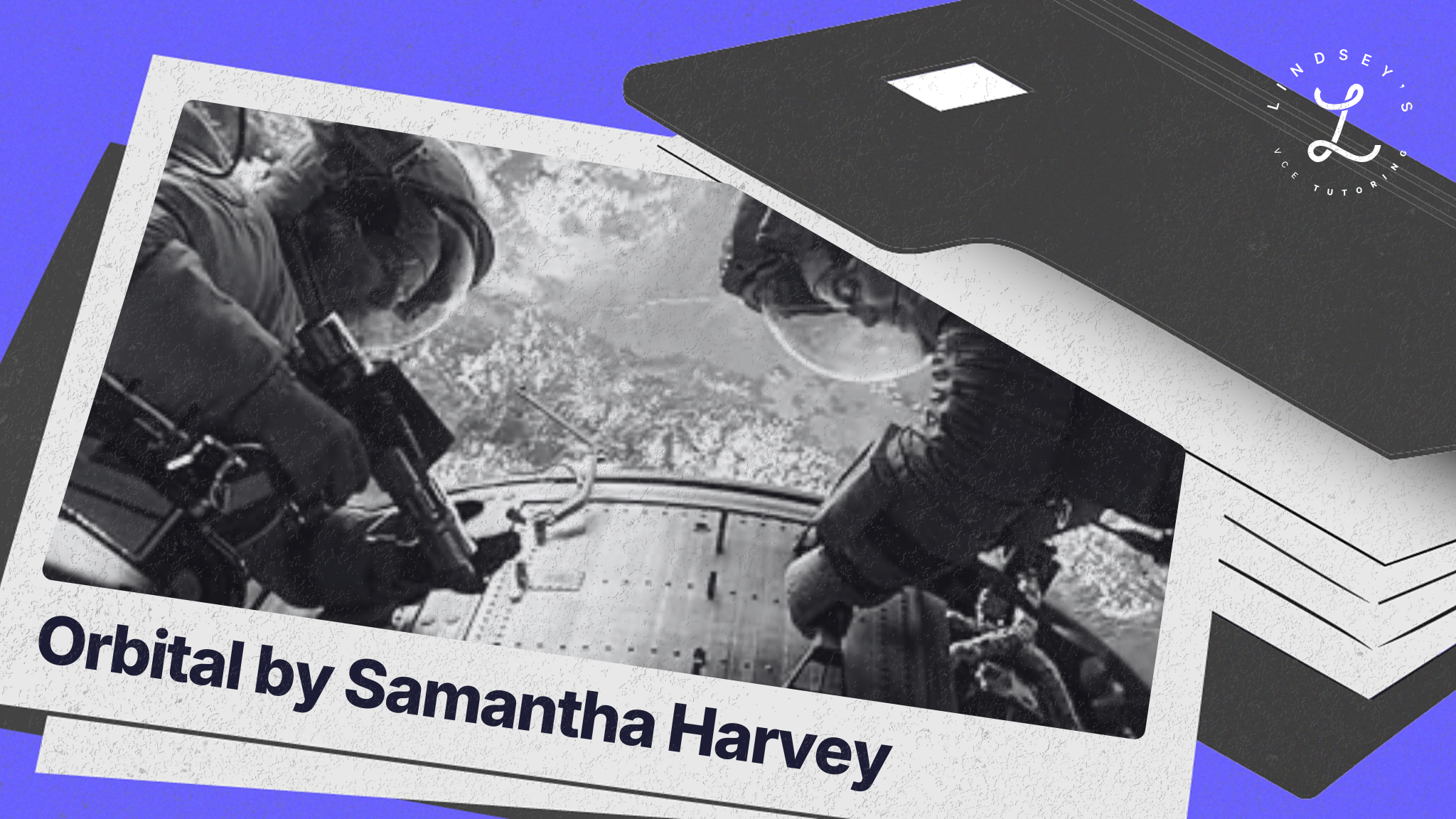
An Ultimate Guide to Orbital
Samantha Harvey’s Orbital (2023) follows a single Earth day in the lives of six astronauts aboard the international space station (ISS), hundreds of miles above earth. As they complete sixteen orbits and witness sixteen sunrises and sunsets, their distant view of Earth encourages reflection on the planet’s beauty, fragility, and the broader significance of human life.
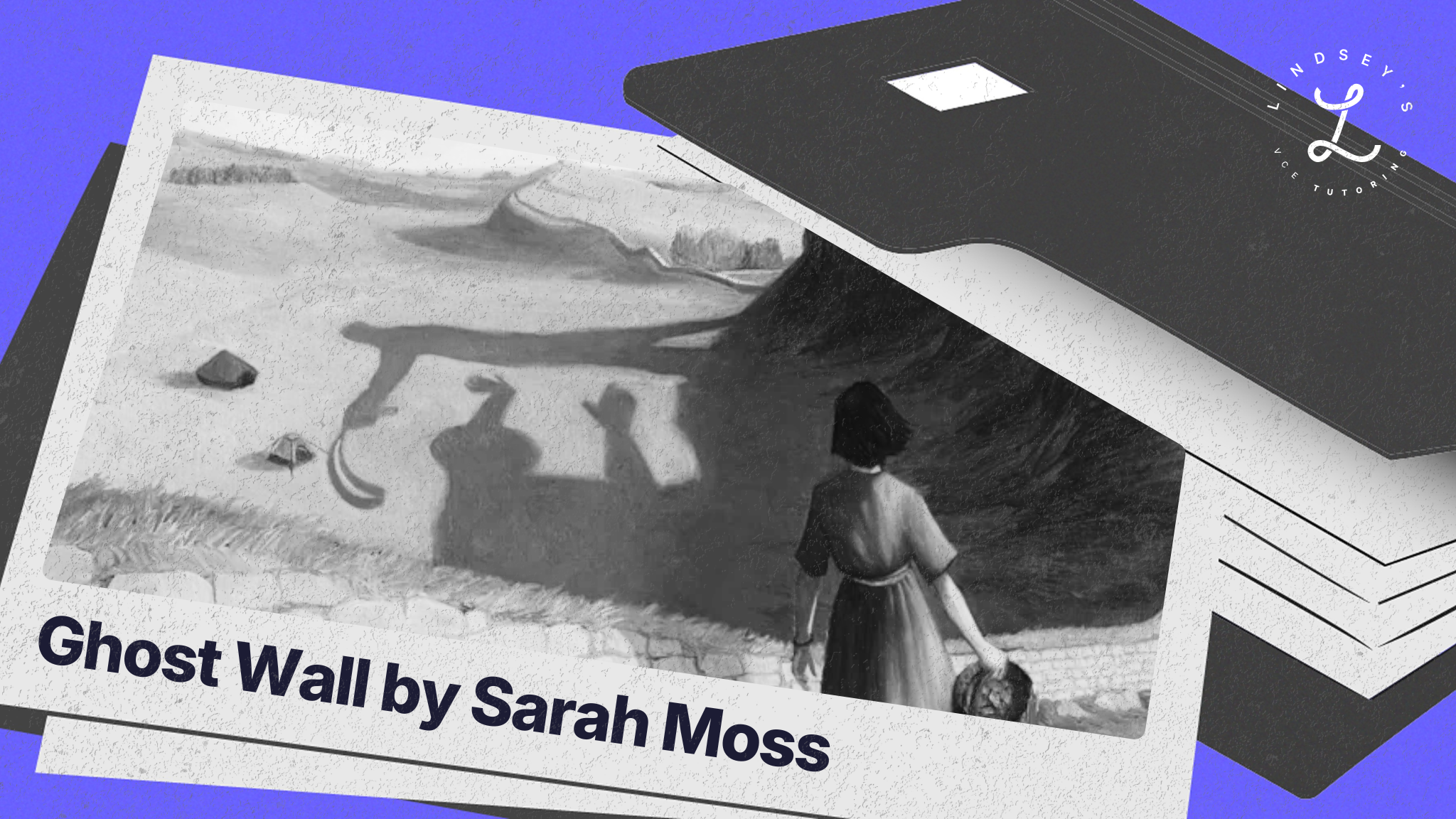
An Ultimate Guide to Ghost Wall
Sarah Moss is a contemporary British novelist, born in 1975 in Glasgow, Scotland. She is known for her literary fiction, including her novels and novellas, and typically explores themes surrounding history, loneliness, family tensions, personal relationships, patriarchy, and women’s roles in society.