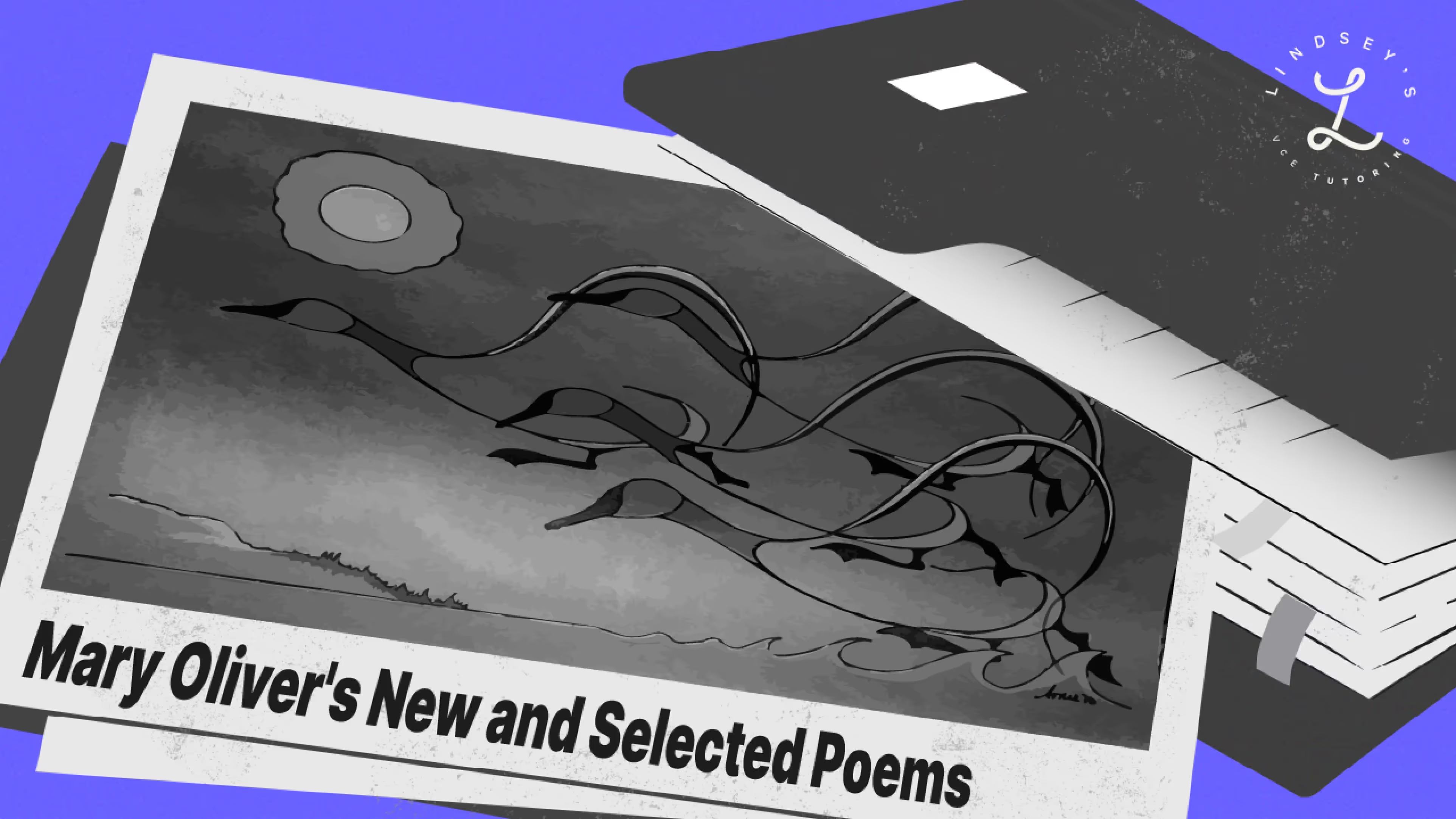
An Ultimate Guide to New and Selected Poems by Mary Oliver

Mary Oliver (1935-2019) was an American poet, known for her meditative observations on the natural world and the accessible and unornamented, yet sharply precise, language of her poetry. Growing up in a difficult home, Oliver found refuge in the peace and wisdom of nature, which understands its unspoken place in the world without the frivolous explanations and trappings of human society. Oliver shared in an interview in 2015: “I got saved by poetry, and I got saved by the beauty of the world.”
Oliver’s poetry and its subject matter - a large percentage being portraits of animals, landscapes, plants - is largely informed by the poet’s philosophy of “listening to the world” around her. Her reverent observations have been praised as an “indefatigable guide to the natural world” (Maxine Kumin, Women’s Review of Books). Kumin has also gone on to state:
[Mary Oliver] stands quite comfortably on the margins of things, on the line between earth and sky, the thin membrane that separates human from what we loosely call animal.
Socio-historical context
The two collections selected for study are Dream Work, published in 1986, and American Primitive, published in 1983. Oliver’s poetry, unlike many other texts on the VCAA text list, was not written in response to her immediate political and societal climate. On the contrary, in these two collections, she steers away from identifiable references to events such as the Cold War or the economic recession. Considering that her poetry functions as a refuge from the difficulties and turmoil of human society, it is not surprising that Oliver chooses to omit this from her work.
Whilst there is no commentary on the dominant political climate of 1980s America, a few of Oliver’s poems reference historical events further in the past. Oliver’s 1945-1985: Poem for the Anniversary directly alludes to the atrocities of World War II, condemning the heinous cruelty of humanity during the Holocaust. In Ghosts and Tecumseh, Oliver acknowledges the inhumanity and irreversible damage that European colonisation has wreaked upon the Indigenous American population and the natural environment. Tecumseh (1768-1813) was a Shawnee chief and warrior who directed Indigenous American resistance to white expansion. He was ultimately killed by U.S. troops.
Students can also approach discussions around context from the perspective of viewing Oliver’s poetry as a continuation of the tradition of 19th century Romanticism (William Wordsworth, Percy B. Shelley, John Keats) and American nature poetry (Walt Whitman, Robert Frost, Emily Dickinson). Like her poetic predecessors, Oliver’s poetry lauds the unfiltered beauty of nature. In particular, Sunrise from Dream Work and Lightning from American Primitive are most evocative of Romantic ideas of the sublime.
Themes
The hidden primality of being human
Humans, Mary Oliver’s poetry muses, are really just animals in fancy clothing and convoluted societies. In her work, Oliver strips back redundant man-made constructs of religion, etiquette and civility, facing the primality of humanness.
In Dream Work, Oliver speaks of a hidden and repressed animal present in every person, the most famous example being Wild Geese, in which she encourages the reader to accept the “soft animal of [their] body”. This concept is established early in the second piece of the collection, Morning Poem: “there is still / somewhere deep within you / a beast shouting that the earth / is exactly what it wanted”. Here she introduces the idea of a creature whose simple, base needs have been overshadowed by hordes of worldly wants and desires. The forcefulness of the beast “shouting” suggests a desperation and determination for the animalistic instinct to emerge.
And emerge it does in August, the intense and vivid opener to American Primitive. The speaker here is wild, free and slightly feral - “thinking / of nothing, cramming / the black honey of summer / into my mouth”. They allow their actions to be governed by the desires of their animal body, their “happy tongue” who longs for the sweetness of blackberries. In Blossom, Oliver’s exploration of the freedom within an untamed body continues. The full moon incites humans to follow “this thrust / from the root / of the body”, a physical, somatic instinct that drives even “the most / thoughtful among us.” There is something slightly Gothic and eerie about the atmosphere of the poem - the mentions of blood and darkness and death, and the heavy allusions to werewolves and lunacy.
A handful of American Primitive poems also allude to the theory of evolution, wherein every creature on earth evolved from aquatic creatures. In White Night, The Fish and The Sea, Oliver reverses this chronology. The ocean is a maternal force - the “motherlap” (The Sea), the “mother / of all waters” (White Night), and to float in the sea, as the speaker does in White Night, is to return to an embryonic state, floating in the womb of the earth. In The Fish, Oliver writes: “I am the fish, the fish is in me.” Here she suggests that evolution is not linear but circular, consistently looping back to that coveted state of primality, and humans are not really as far removed from our scaled and finned ancestors as we believe. Wrought with “nostalgia” (The Sea), the “body remembers” and yearns to return to that motherly embrace.
Human cruelty
Contrasting her peaceful meditations on nature, Oliver’s poetry explores the juxtaposing pain and chaos brought on by human cruelty. Human cruelty is particularly terrifying because it is lucid and deliberate - unlike animals who faithfully follow their physical instincts and strive only to survive and to enjoy living when they can, humans consciously harm and destroy.
Human cruelty is explored on a personal scale in Rage, The Journey and The Visitor, which sketch out Oliver’s difficult childhood home. The most distressing of these is Rage. The abuser, the unnamed “you”, is a depiction of Oliver’s own father, whose deliberate morning ritual - “you shave, you dress” - is held up as a shield and a farce that hides the monstrous assault he commits “in the night”. In both The Journey and The Visitor, we see Oliver managing to heave herself out of this abusive household, with a tenuous reconciliation - if one can call the meeting such a thing - occurring in The Visitor.
Oliver also explores human cruelty on a broader national scale. In 1945-1985: Poem for the Anniversary, she contemplates and criticises the sadistic inhumanity of the Holocaust. Her stanzas alternate between descriptions of the genocide and of a meeting between a fawn and a dog, seeking to illustrate a dichotomy between human society and the gentleness of animals. The fawn and dog, who get along due to their innocence and lack of indoctrination, are symbolic of the peace of a world now lost, tainted by the segregation and cruelty preached by mankind. The idea of a tragic old, lost world is explored further in Ghosts, a reflection on the colonisation of America. In the third section, the sparrow chicks “have left the perfect world and fallen, / helpless and blind / into the flowered fields and the perils / of this one”. “This one” refers to the present America, ravaged by invasion and hunting, where animals are left to rot “in the prairie heat”.
Peace and growth in tumult
Whilst much of Oliver’s work features tranquil, still portraits of the natural world, the poet is in no way naively optimistic nor evasive of human struggles. Rather, Oliver comes to terms with the fact that life is fraught with difficulties and violent fluctuations, which one cannot escape. From the opening poem Dogfish which speaks of a hopeless looming future, to the eponymous swamp in Crossing the Swamp, the poet acknowledges the challenges of existing in the world - “here is swamp, here is struggle…” (Crossing the Swamp).
Oliver finds peace in the knowledge that such struggle is unavoidable, but ultimately survivable - if you wish to push through and do so. In Blackwater Woods, the final poem in American Primitive, is a summative reflection on “everything / I have ever learned / in my lifetime”. The churning and insidious “black river of loss” is depicted as an inevitable obstacle in anyone’s life; however, the crossing of it leads to “salvation”.
Ultimately, Oliver seeks not to corral and wrestle the ups and downs of life into a flat line, a constant flow of calm; rather, she advocates for finding peace in the tumult. “It never grew easy,” she meditates in Starfish, “but at last I grew peaceful.” The murky swamp, which the speaker struggles to cross, is slick and noxious but simultaneously a vessel of transformation and hope, nourishing the “dry stick”. Hence, Oliver shares how difficulties in life are able to help people grow - in crossing the swamp, you toil, you struggle, but ultimately, you are healed.
Key textual features
Enjambment
All of Oliver’s poetry feature enjambment, her words flowing across lines and stanzas despite visual and structural breaks in the sentence. By doing so, Oliver subtly expresses the fluidity and freedom found in the natural world, which is unencumbered by man made restrictions of structure. Too, it gives her poetry a conversational, organic air; posed as acute, but nonetheless casual observations, rather than adhering to strictly curated poetic traditions.
Whilst not applicable to every poem, oftentimes the last word in an enjambed line has been specifically chosen in order to emphasise a concept. For instance, Dogfish’s repeated enjambment of “I want” allows this expression of human yearning to linger, drawing attention to the idea of desperation and desire.
Another effect of Oliver’s flowing enjambment is its ability to create contrast with, and hence emphasise, end-stopped lines. For example, the three final lines of 1945-1985: Poem for the Anniversary are all isolated and end-stopped, creating a jarring and haunting emphasis.
Poetic form and structure
Oliver’s poetry utilises a variety of structures, and astute students will zoom out from language analysis to consider the shape and organisation of the lines.
Some poems, such as The Fish, Acid and Rage, feature one continuous block of text with no break. This choice can communicate a variety of things, depending on the subject matter - an uninterrupted and intense stream of consciousness or a sense of unity and togetherness. Others are split into stanzas - Morning Poem and In Blackwater Woods both have lines grouped into four, imitative of quatrains. The consistency of these stanzas creates a sense of stability and peace. A more unique method of structuring poems can be seen in One or Two Things, Two Kinds of Deliverance and Ghosts, split into numbered sections. This is evocative of a sequential progression, an unfolding metamorphosis, and also indicates Oliver’s deliberate attention to the number of sections. The symbolism of the numbers 3 (Two Kinds of Deliverance) or 7 (Ghosts, One or Two Things) is worth exploring and experimenting with.
Several of Oliver’s poems feature sections or stanzas separated by a small flower symbol - a fleuron. Aside from indicating a break in the poetry, the floral motif visually cements the presence and importance of nature, permeating her work even in a structural capacity.
Allusions
Oliver’s poetry features a few allusions to the historical events of WWII (Poem for the Anniversary and University Hospital, Boston) and American colonisation (Two Kinds of Deliverance, Ghosts and Tecumseh). In these instances, allusions are used to contextualise and demonstrate the harrowing reality of human cruelty and violence.
Oliver also alludes to two other historical figures: Robert Schumann (1810-1856), Romantic composer and pianist, and Stanley Kunitz (1905-2006), American poet. Both these men, artistic creators in their own right, serve as muses which inspire Oliver to contemplate questions of human mortality and passion.
Raised as a strict Christian (and having separated herself from organised religion later in her life), Oliver’s poetry also contains some subtle - but nonetheless golden, if discovered - Biblical allusions. Notable examples include references to Christ’s forty-day trial in the desert in Wild Geese, the resurrection in The Fish, and Genesis in The Sea. In these allusions, Oliver often either dismantles the power and authority of religious practices and beliefs, or uses Christian imagery to elevate the sacred and divine characteristics of nature. Despite being a self-professed spiritual individual, Oliver does not subscribe to Christian doctrine - this should be kept in mind when analysing religious allusions.
Quiz Time!
What is Mary Oliver's poetic style?
Click to reveal answer
Oliver writes in accessible, unornamented language with precise imagery drawn from nature — animals, plants, landscapes. She uses free verse, occasionally structured stanzas, and fleurons as structural devices, creating a meditative tone that invites readers to slow down and observe.
How does Mary Oliver use nature in her poetry?
Click to reveal answer
Nature in Oliver's poetry is both a teacher and a sanctuary. It models how to live — with acceptance, presence, and without ego. Animals and landscapes are studied with reverence, offering the speaker (and reader) guidance on mortality, purpose, and belonging.
What are the main themes of Mary Oliver's poetry?
Click to reveal answer
Mary Oliver's poetry explores the natural world as a source of wisdom, solace, and spiritual renewal. Key themes include humanity's place in nature, mortality, the importance of attention and presence, and the tension between human cruelty and nature's enduring beauty.
What collections by Mary Oliver are studied in VCE?
Click to reveal answer
The two collections studied are American Primitive (1983) and Dream Work (1986). Both reflect Oliver's philosophy of "listening to the world" and her refuge in nature after a difficult childhood. Neither collection directly engages with the political events of 1980s America.
What historical events does Mary Oliver reference in her poetry?
Click to reveal answer
Oliver alludes to WWII in 1945-1985: Poem for the Anniversary, condemning the Holocaust. In Ghosts and Tecumseh, she acknowledges the destruction wrought by European colonisation on Indigenous Americans. Biblical allusions also appear, often to subvert or reimagine religious authority through a nature-centred lens.
Related text guides

An Ultimate Guide to Langston Hughes
Langston Hughes (1901-1967) was one of the most influential American writers, whose work focused on expressing the African American experience during a time of racial injustice.
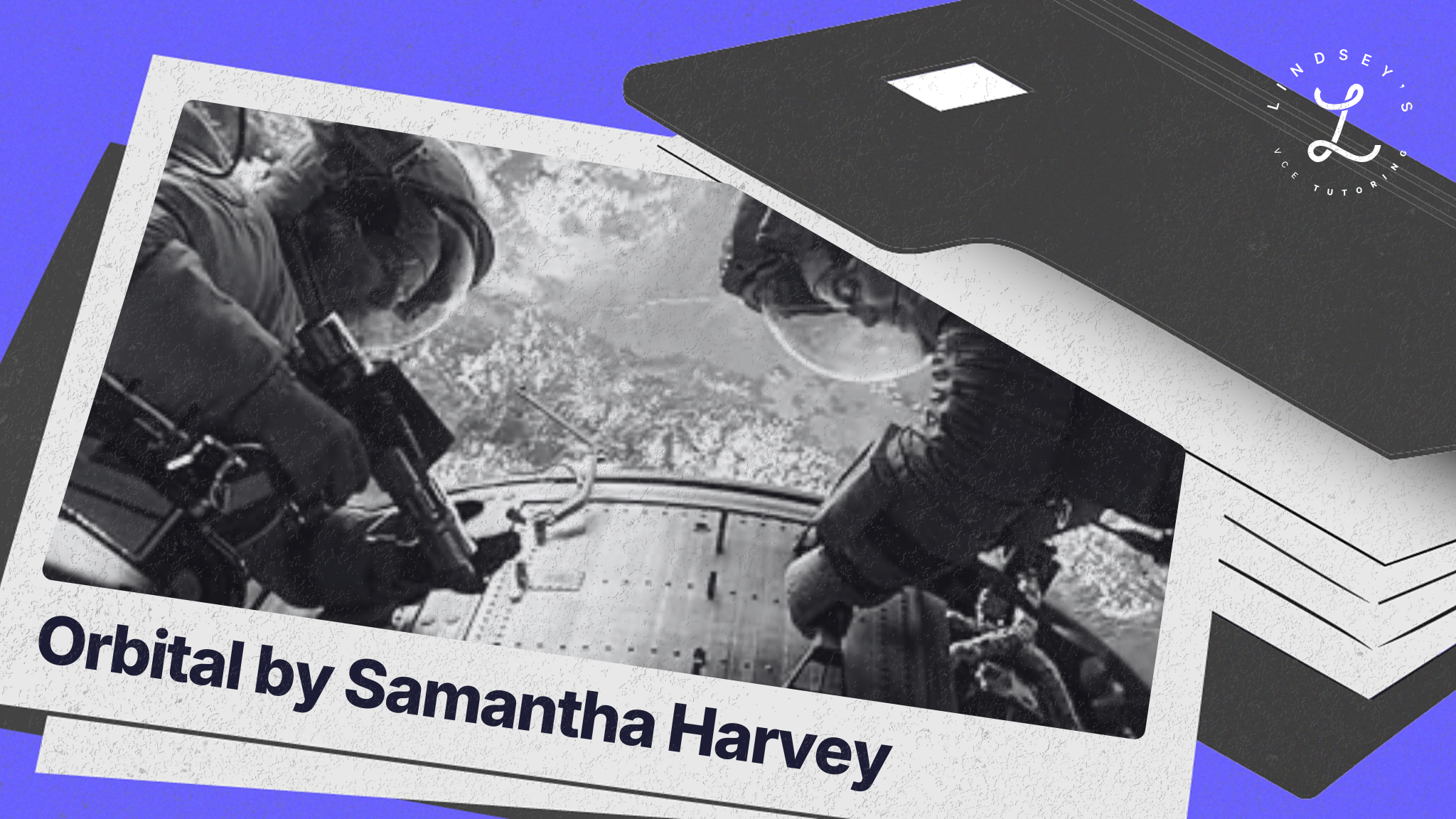
An Ultimate Guide to Orbital
Samantha Harvey’s Orbital (2023) follows a single Earth day in the lives of six astronauts aboard the international space station (ISS), hundreds of miles above earth. As they complete sixteen orbits and witness sixteen sunrises and sunsets, their distant view of Earth encourages reflection on the planet’s beauty, fragility, and the broader significance of human life.
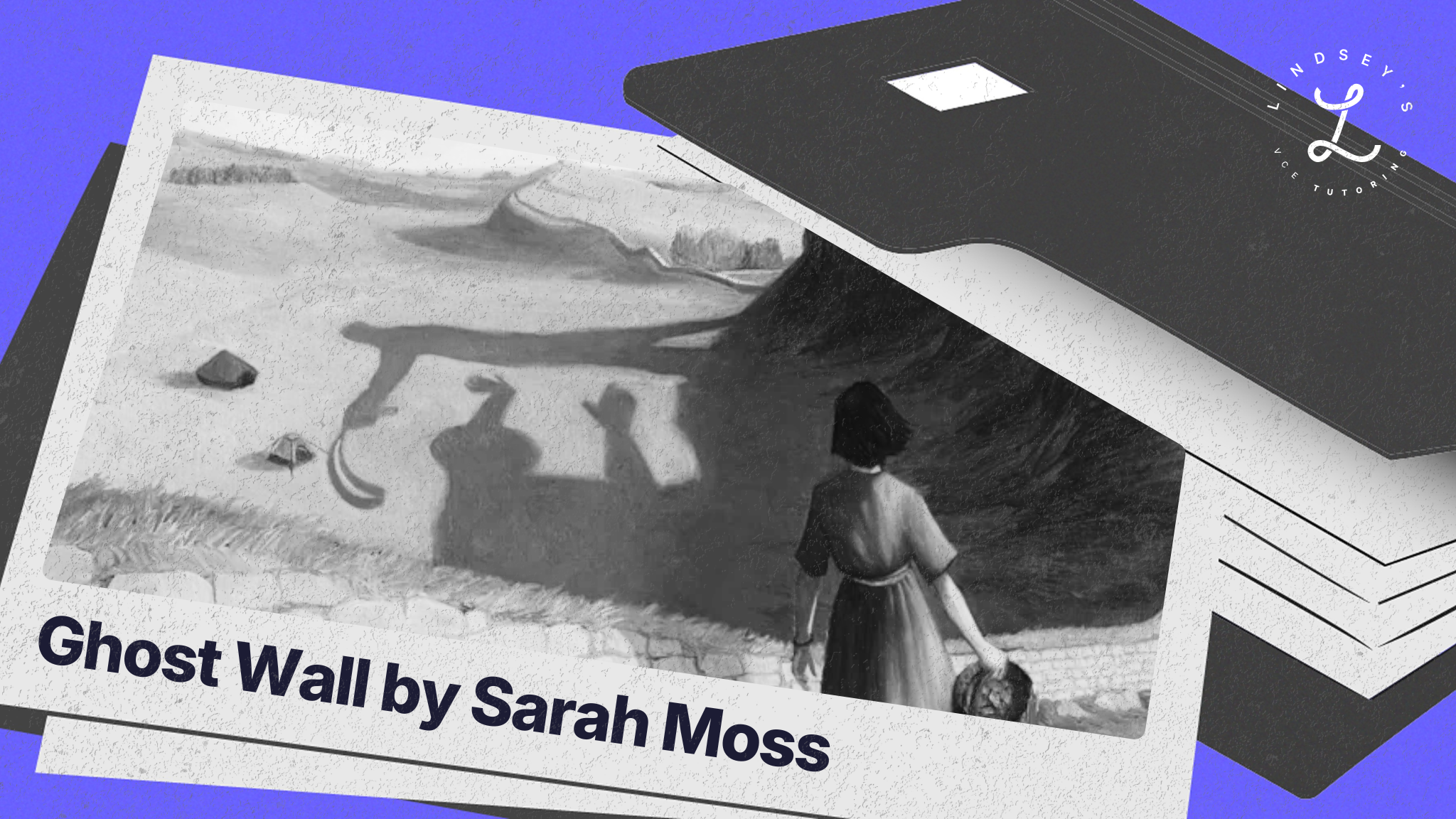
An Ultimate Guide to Ghost Wall
Sarah Moss is a contemporary British novelist, born in 1975 in Glasgow, Scotland. She is known for her literary fiction, including her novels and novellas, and typically explores themes surrounding history, loneliness, family tensions, personal relationships, patriarchy, and women’s roles in society.