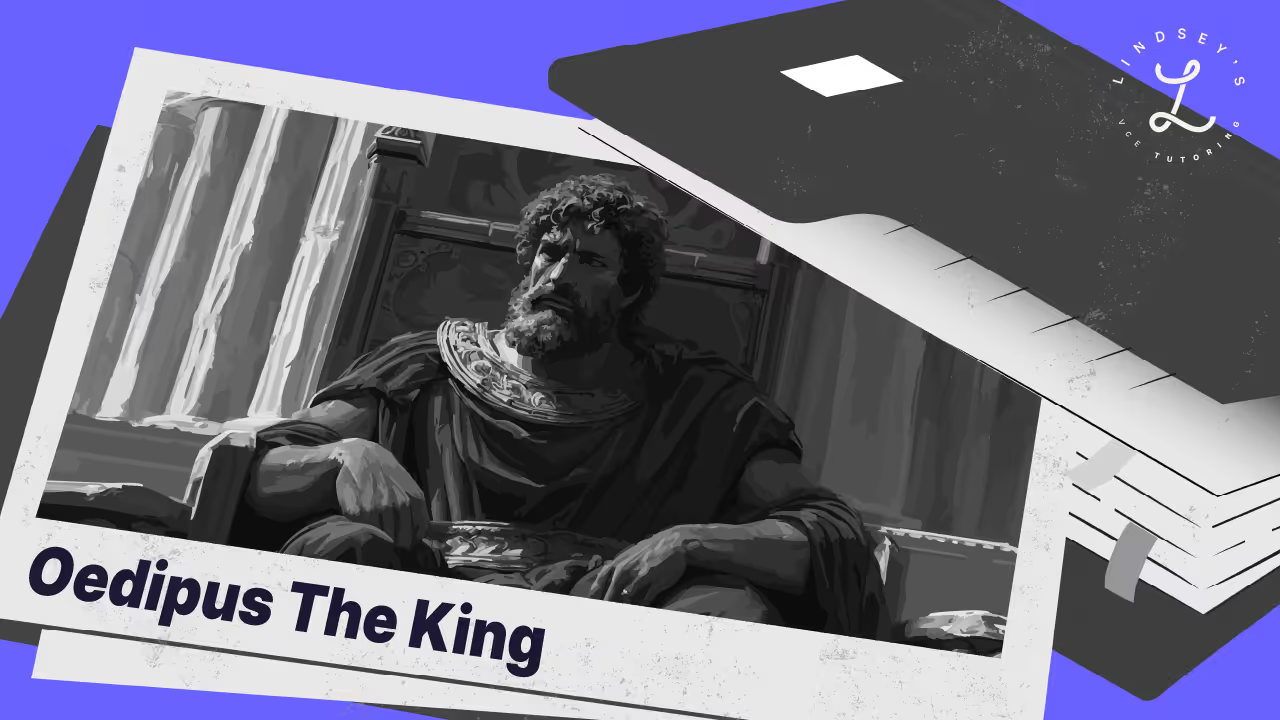
An Ultimate Guide to Oedipus the King

Sophocles' tragic play Oedipus The King dramatises the spectacular deterioration of its titular protagonist as he uncovers the devastating truth of his own identity. The drama opens in Thebes, where a catastrophic plague ravages the city. A procession of priests, bearing branches wound in wool, approaches the royal palace to supplicate their king Oedipus, who previously saved Thebes by solving the Sphinx's riddle. Upon consulting the oracle at Delphi through Creon, it is revealed that to end the plague, Thebes must banish the murderer of the previous king, Laius. Oedipus, now married to Laius' widow Jocasta, commits himself to uncovering the killer's identity with characteristic determination and intelligence.
The investigation unfolds through a series of increasingly revealing encounters. The blind prophet Tiresias initially refuses to speak but, when provoked, accuses Oedipus himself of being the murderer. Oedipus dismisses this as a conspiracy between Tiresias and Creon to seize power. Jocasta attempts to comfort Oedipus by discrediting prophecies, revealing that an oracle once predicted her son would kill his father and marry his mother. To prevent this, she gave her infant son to a shepherd to be left to die on Mount Cithaeron. Her story, however, raises disturbing parallels with Oedipus' own past.
Through relentless questioning of witnesses, including a messenger from Corinth and an old shepherd, Oedipus gradually uncovers the horrifying truth: he is the son of Laius and Jocasta, saved from death as an infant and raised in Corinth. Unknowingly, he fulfilled the prophecy by killing his father at a crossroads and marrying his mother. Upon this revelation, Jocasta hangs herself, and Oedipus gouges out his own eyes with her brooches. The play concludes with Oedipus stripped of his kingship, preparing for exile, while his children face the consequences of their polluted heritage.
Historical and cultural context
Within the contemporary context of 429 BCE Athens, Sophocles' play emerged during a period of significant philosophical and social transformation. The rise of rationalist philosophy and sophist thinking posed direct challenges to traditional religious authority, a tension that Sophocles explores through Oedipus' privileging of human intellect over divine wisdom. The sophist movement's emphasis on human reason and skepticism toward divine authority finds expression in Jocasta's dismissal of prophecies and Oedipus' reliance on his investigative abilities rather than religious insight.
The plague devastating Thebes would have resonated particularly strongly with the Athenian audience, who had recently experienced their own devastating plague during the Peloponnesian War. This immediate historical parallel lent urgent relevance to the play's exploration of leadership during crisis and the relationship between individual corruption and collective suffering. The audience's experience with plague and political upheaval would have deepened their engagement with questions of divine punishment and human responsibility.
The play operates within the traditional Greek understanding of the relationship between mortals, divine will, and the polis. By situating the action at "the royal house of Thebes," Sophocles establishes a liminal space between the polis (political sphere) and the oikos (domestic sphere), where public and private responsibilities intersect. This setting foregrounds how Oedipus' violations will degrade him as both a king and a familial patriarch, revealing the intrinsic connection between ancestry, identity, and civic welfare in ancient Greek society. The priest's reference to the Theban supplicants as "[Oedipus'] children" reinforces this dual responsibility, while the stage direction noting the palace as a mere "facade" suggests the precarious nature of human authority.
The religious framework of fifth-century Athens contextualises our understanding of the play's treatment of prophecy and divine knowledge. The oracle at Delphi represents genuine divine authority for the Athenian audience, rendering Jocasta's skepticism toward prophecies particularly transgressive. Similarly, the character of Tiresias embodies the respected tradition of prophetic wisdom, his physical blindness paradoxically marking him as a vessel for divine insight.
Authorial intent
Instead of dramatising the tale of Oedipus, Sophocles structures his retelling as a retrospective investigation, choosing to begin after the tragic acts have already occurred. This unusual chronological choice shifts emphasis away from the events themselves to their psychological impact and discovery.
By setting the play during a plague, Sophocles establishes immediate relevance for his audience while creating a metaphorical framework for examining social and political corruption. His construction of the plague as both literal crisis and symbolic punishment demonstrates his aim to connect personal morality with civic welfare. Furthermore, unlike many Greek tragedies where the chorus maintains a consistent perspective, Sophocles has his chorus undergo a dramatic shift in attitude toward Oedipus. Their initial reverence transforms into horror and pity, suggesting the playwright's intent to guide the audience through a similar emotional journey.
Sophocles’ decision to emphasise Oedipus' investigation over the prophecies themselves represents an engagement with contemporary philosophical debates. While maintaining the traditional religious framework, Sophocles creates space for examining human rationality and its limitations. However, rather than simply condemning or celebrating human reason, he constructs a narrative in which rational inquiry leads simultaneously to truth and destruction, suggesting his intent to explore the paradoxical nature of human knowledge.
Textual features
Sophocles leverages the dramatic structure to build tension through a series of revelations that gradually align human testimony with divine prophecy. The prologue immediately establishes Oedipus' dual responsibility as both civic leader and family patriarch, while presenting him as "majestic but for a telltale limp," a physical manifestation of his hidden identity that foreshadows his eventual fall.
Each episode functions as a constructed movement toward truth, with new information simultaneously illuminating the past and driving toward future revelation. In particular, the interrogation scenes demonstrate Sophocles' skill in building dramatic tension, as Oedipus' questioning becomes increasingly aggressive while witnesses become more reluctant to speak. The playwright creates a sense of inevitability as the truth inexorably emerges despite attempts to suppress it.
- Prologue/Parados: Establishes Oedipus' dual role as familial patriarch and civic leader
- Episodes: Each builds tension through revelations that gradually align human testimony with divine prophecy
- Exodos: Culminates in physical manifestation of psychological destruction
- Chorus: Provides commentary that universalizes Oedipus' experience
The Chorus plays a role in providing commentary that universalises Oedipus' experience while representing the collective consciousness of Thebes. Their shifting perspective - from reverence for Oedipus as savior to horror at his pollution - mirrors the audience's emotional journey. Their final observation that no man should be counted happy until death serves as both specific commentary on Oedipus' fall and universal warning about the precariousness of human happiness.
The language of the play is dominated by networks of imagery that operate at both literal and symbolic levels. The central motif of sight and blindness enables Sophocles’ meditation on the nature of knowledge and understanding. Light and darkness imagery parallels this journey from ignorance to knowledge. Oedipus' cry, "O light—now let me look my last on you!" marks his transition from illumination to darkness, while references to sunlight and shadow throughout the play reinforce themes of truth and concealment. The metaphorical darkness that has shrouded Oedipus' identity becomes literal darkness as he punishes himself for his unwitting crimes.
Disease and corruption emerge as central metaphors throughout the text. The plague serves as a physical manifestation of moral corruption, with the "fiery god of fever" representing divine punishment for hidden transgression. Creon's command to "drive the corruption from the land" operates simultaneously at literal and metaphorical levels, linking civic health with moral purity.
Dramatic irony serves as a key technique, with the audience's prior knowledge of the myth creating sustained tension with the characters' ignorance. Oedipus' proclamations against Laius' murderer become unwitting self-condemnation, while his insistence that he was "not asleep" ironically emphasises his metaphorical slumber regarding his true identity. Jocasta's dismissal of prophecies precedes their inevitable proof, her assertion that "Apollo brought neither thing to pass" highlighting her tragic blindness to impending truth.
Themes
The tension between divine will and human agency
Divine authority and prophecy
Sophocles establishes a tension between divine omniscience and human intellect through the oracle's prophecies and their inevitable fulfillment. The play opens with an implicit acknowledgment of divine authority, as the priest appeals to Oedipus while "huddling at [his] altar" (Prologue), positioning him as a mediator between the mortal and divine realms. However, this elevation of Oedipus to a "proxy God" status demonstrates the dangerous conflation of mortal and divine power that permeates the play.
The prophecies serve as the primary vehicle for divine will, with their inexorable fulfillment highlighting the limits of human agency. Despite Jocasta's assertion that "nothing human can penetrate the future," the accuracy of the oracles proves otherwise. The dramatic irony of her claim that "Apollo brought neither thing to pass" underscores the futility of mortal resistance to divine decree.
Human agency and choice
While divine will appears absolute, Sophocles preserves space for human agency within his narrative. Oedipus' relentless pursuit of truth, exemplified in his aggressive interrogation of the Shepherd, demonstrates the role of human choice in fulfilling prophecy. His command to "seize" and "torture" the Shepherd reveals how his own decisions actively advance his destined path.
The play suggests that prophecies do not force actions but rather predict choices humans will freely make. Both Jocasta and Oedipus attempt to thwart the prophecies through their decisions - she by ordering her infant's death, he by fleeing Corinth - yet these very choices enable the prophecies' fulfillment. This interplay between fate and free will creates what the text describes as a "half-agency": characters retain the ability to choose while operating within the constraints of divine predestination.
The limitations of human knowledge
Metaphorical and literal blindness
The motif of sight and blindness serves as the central metaphor for human knowledge and its limitations. Oedipus' physical sight contrasts with his metaphorical blindness to truth, while the blind prophet Tiresias possesses true insight. The play's dramatic irony hinges on this disparity between seeing and knowing, as Oedipus' proclamation that he "wasn't asleep" ironically emphasises his metaphorical slumber regarding his identity.
This culminates in Oedipus' self-blinding, which physically manifests his recognition of the limits of human perception. His cry that his eyes will "see no more the pain I suffered, all the pain I caused" transforms his metaphorical blindness into literal darkness, acknowledging the failure of human sight to perceive divine truth.
The pursuit of knowledge
Oedipus' relentless investigation demonstrates both the nobility and danger of pursuing knowledge. His determination to uncover truth, initially motivated by concern for his plague-stricken city, reveals his adherence to Aristotelian virtues of nobility and justice. However, this same pursuit leads to his destruction, suggesting the potential perils of human intellectual ambition.
The play presents knowledge as both necessary and devastating. The Shepherd's characterisation of truth as "horrible" emphasises its destructive potential, while Oedipus' transition from confidence to despair after gaining knowledge illustrates its psychological toll. This duality suggests that while truth must be pursued, its revelation often brings unforeseen consequences.
The role of the polis and individual responsibility
Civic duty and leadership
Oedipus' position as king places him at the intersection of personal and civic responsibility. His initial actions demonstrate exemplary leadership, as he proactively seeks the oracle's counsel and commits to investigating Laius' murder. The Chorus' admiration reflects his fulfillment of the ideal ruler's duties to both "the common crises of our lives and face-to-face encounters with the gods."
However, his personal corruption ultimately threatens the entire polis, as symbolised by the plague ravaging Thebes. This connection between individual moral status and collective welfare emphasizes the interconnected nature of personal and civic responsibility in Greek society.
Individual action and collective consequence
The play demonstrates how individual actions ripple outward to affect the entire community. The "fiery God of fever" afflicting Thebes stems from Oedipus' unknowing transgressions, while his eventual exile satisfies both personal punishment and civic purification. This dual impact of individual action on both personal and collective spheres reinforces the play's examination of responsibility at multiple levels.
The human condition: hamartia and hubris
The play ultimately presents tragedy as inherent to the human condition rather than the result of evil. Oedipus' downfall stems from quintessentially human qualities - intelligence, determination, and moral conviction - suggesting that tragedy arises from the fundamental limitations and contradictions of human existence itself. The Chorus' final observation to "count no man happy till he dies, free of pain at last" extends beyond Oedipus to comment on the universal precariousness of human happiness.
Sophocles presents Oedipus as a paradigm of human greatness and limitation. His solving of the Sphinx's riddle demonstrates the power of human intelligence, yet this same intelligence proves inadequate in recognizing his own identity. His determination to uncover truth reflects noble leadership, yet this very nobility ensures his destruction.
The play's enduring relevance stems from its exploration of universal human experiences: the search for identity, the burden of responsibility, the limitations of knowledge, and the inevitability of suffering despite virtue. Through Oedipus' tragedy, Sophocles suggests that these challenges are not merely individual misfortunes but essential aspects of the human condition, creating a work that continues to resonate across cultural and temporal boundaries.
Quiz Time!
What is hamartia in Oedipus Rex?
Click to reveal answer
Hamartia refers to the tragic flaw that leads to a hero's downfall. Oedipus' hamartia is not evil but his human qualities — intelligence, determination, and moral conviction — which paradoxically drive him towards truth and destruction simultaneously.
What are the main themes in Oedipus Rex?
Click to reveal answer
Key themes include the tension between divine will and human agency, the limitations of human knowledge, hamartia and hubris, and the relationship between individual responsibility and the health of the polis. The play interrogates how far humans can truly know or control their fates.
What role does the Chorus play in Oedipus Rex?
Click to reveal answer
The Chorus represents the collective consciousness of Thebes. Their perspective shifts from reverence to horror, mirroring the audience's emotional journey. Their final observation — count no man happy until death — extends Oedipus' tragedy into a universal warning.
What is the significance of blindness in Oedipus Rex?
Click to reveal answer
Blindness is the play's central metaphor. Oedipus' physical sight contrasts with his ignorance of his own identity, while blind Tiresias possesses true insight. Oedipus' self-blinding at the end transforms metaphorical blindness into literal darkness, acknowledging the limits of human perception.
Related text guides
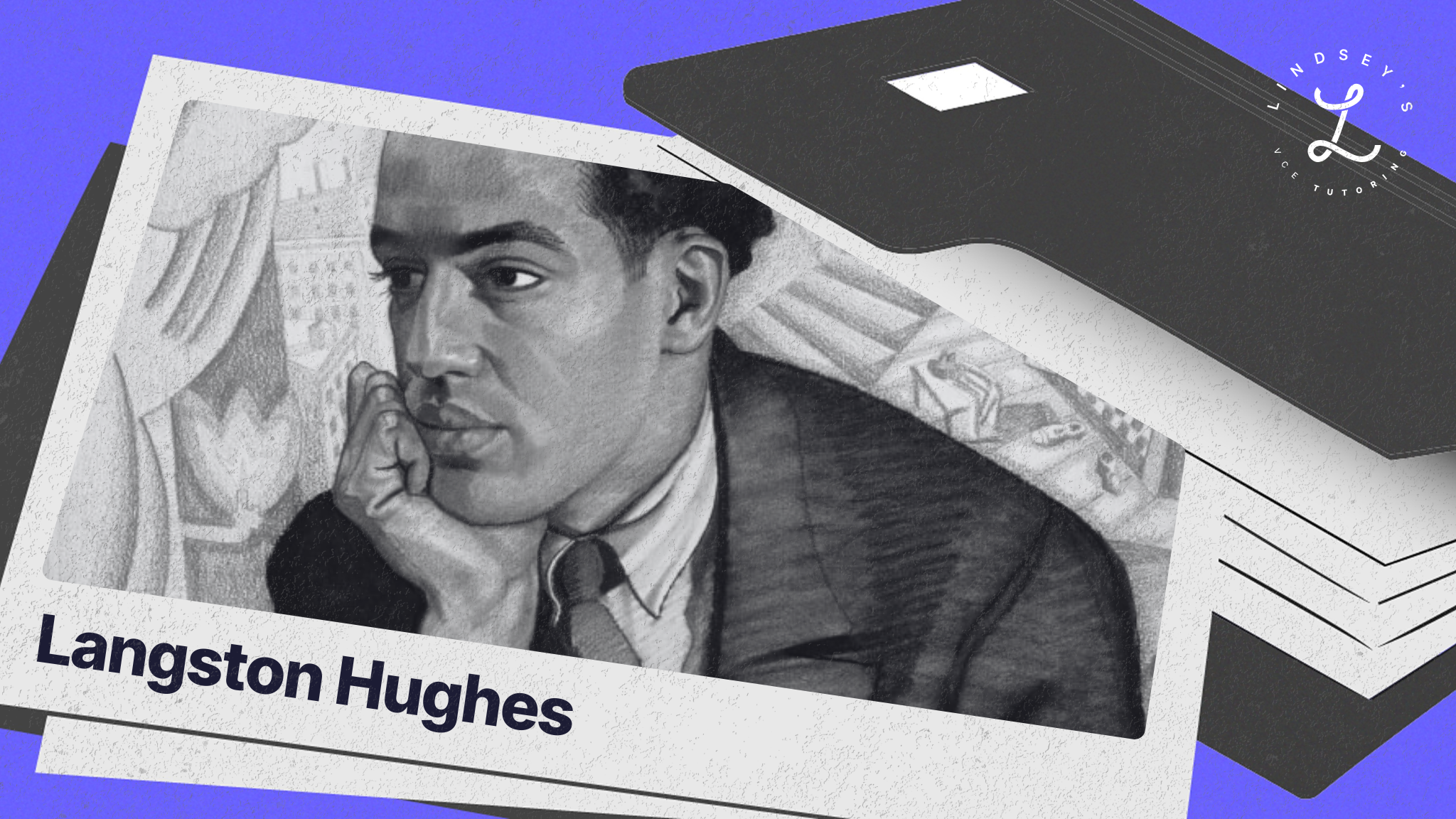
An Ultimate Guide to Langston Hughes
Langston Hughes (1901-1967) was one of the most influential American writers, whose work focused on expressing the African American experience during a time of racial injustice.

An Ultimate Guide to Orbital
Samantha Harvey’s Orbital (2023) follows a single Earth day in the lives of six astronauts aboard the international space station (ISS), hundreds of miles above earth. As they complete sixteen orbits and witness sixteen sunrises and sunsets, their distant view of Earth encourages reflection on the planet’s beauty, fragility, and the broader significance of human life.
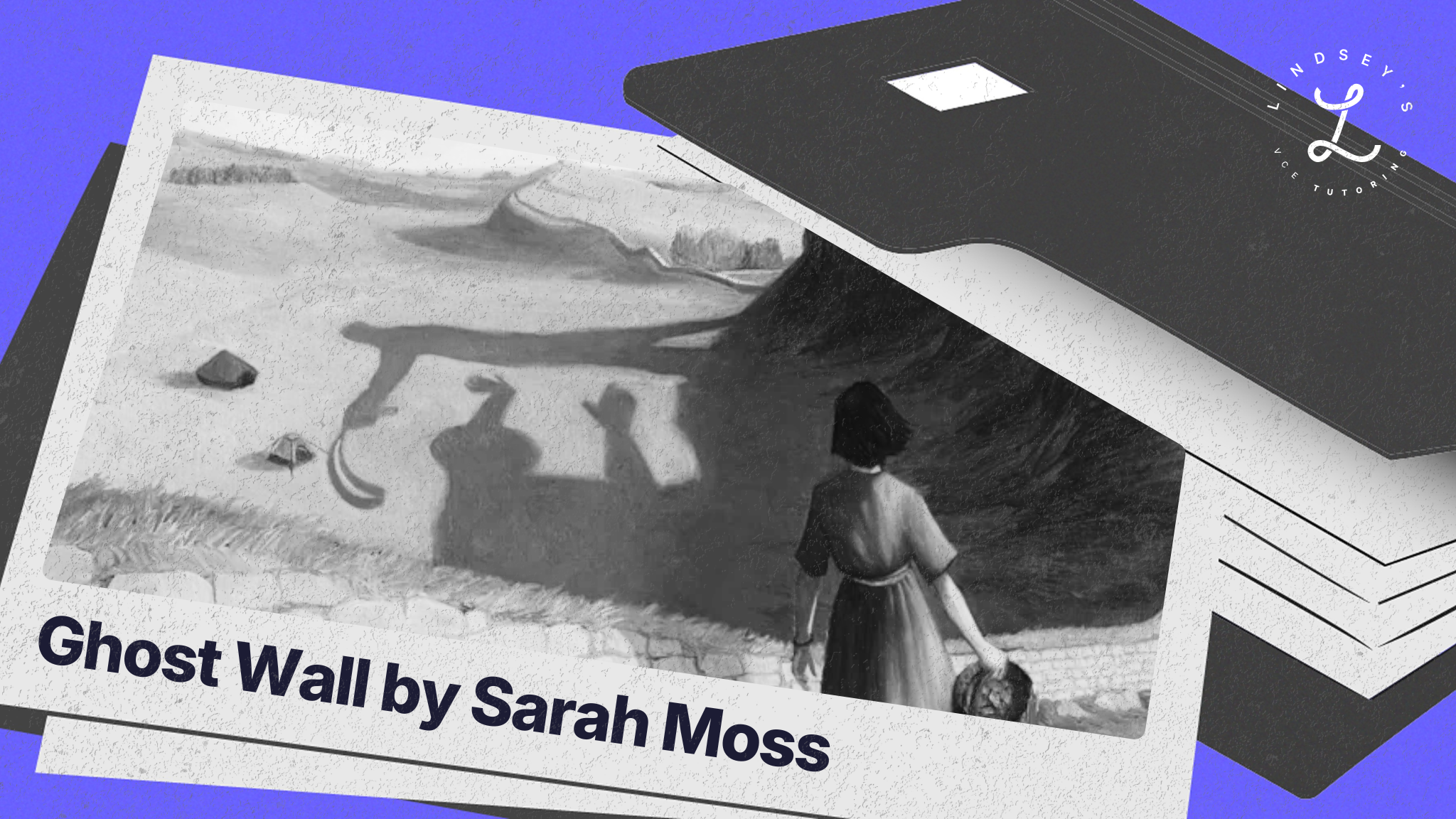
An Ultimate Guide to Ghost Wall
Sarah Moss is a contemporary British novelist, born in 1975 in Glasgow, Scotland. She is known for her literary fiction, including her novels and novellas, and typically explores themes surrounding history, loneliness, family tensions, personal relationships, patriarchy, and women’s roles in society.